elynjacobs

Posts Tagged ‘Cancer Coach Elyn Jacobs’

Searching for Answers for Cancer Patients-Part 1

In Uncategorized on February 3, 2014 at 1:03 pm

Last week I once again had the pleasure of chatting with Dr Michael Schachter on my radio show Survive and Live Well. Our topic–Searching for Answers for Cancer Patients, a three part discussion starting with a critique of the current standard of care all the way to the latest therapies that alternative medicine has to offer.  In part one on December 10th, Dr Schachter presented a critical analysis of current conventional cancer standard of care practices. In part two, Dr Schachter critiqued varies diets for cancer patients, and discussed what he believes to be important areas for the cancer clinician and the cancer patient to consider as part of a total program. Below is a synopsis of Part I (Part II to follow).

Part I, December 10th, 2013 –Know Your Options: Never Operate Out of Fear

The current standard of care (SOC) recommends/mandates the use of surgery, radiation, chemotherapy and targeted therapies as the first line of defense against cancer.  Dr Schachter presented a critical analysis of why this might not always be the best answer for cancer–and certainly should not be the only options considered by the cancer patient. He explained that patients are often bullied into accepting treatment and may even be misled into thinking that they are being offered a cure; but that sadly this is often a gross exaggeration of the ability of conventional medicine to cure the cancer patient.  He also pointed out that the SOC might actually be contributing to more cancer and in some cases worsens the prognosis of patients with cancer in a significant number of cases. Additionally, conventional cancer treatment may result in life-threatening side effects and a reduced quality of life. (Integrative oncology has made significant strides in improving survival from cancer and its treatment, but we are still not winning the war.)

Although Dr. Schachter applauds the efforts of practitioners who have begun to make nutritional recommendations, including dietary suggestions and nutritional supplements, to cancer patients undergoing conventional treatment, he is concerned that integrative oncology practitioners tend to accept conventional treatment as a given. As an example, he cited the excellent work of Keith Block MD, who is regarded by many as the most respected integrative oncologist in the United States. His 2009 published book, “Life over Cancer” is regarded by such respected integrative physicians and scientists as Andrew Weil MD, Leo Galland MD, James Gordon MD and Ralph Moss as the definitive work in integrative oncology. Dr. Schachter points out that much of the material in this book is geared to helping patients tolerate the adverse effects of conventional treatment, such as radiation and chemotherapy. Dr. Schachter’s position is that it may be time to question the entire approach of accepting conventional treatment as a given. Many cancer patients may be better off just ignoring recommendations for conventional treatment and focusing on alternative non-toxic treatment modalities. (Note that this section on Dr. Block was discussed in Part 2, but its placement seemed more appropriate here.)

Chemotherapy interferes with rapidly growing cells and is non-specific: normal cells are killed with cancer cells.  Currently there seems to be a movement toward what are called targeted therapies as an adjunct to surgery, radiation and chemotherapy.  Targeted therapies block the growth of cancer cells by interfering with specific targeted   enzymes needed for carcinogenesis and tumor growth.  Dr Schachter explained that targeted therapies mostly show modest benefits of a few months more survival in the clinical trials that have been conducted with advanced stage 4 cancer patients. Also, these treatments still have adverse side effects because the enzymes that are inhibited are also needed by normal cells and their inhibition may result in a long list of adverse effects. Nevertheless, the adverse effects of the targeted therapies are somewhat less than classical chemotherapy, which kills many normal cells along with the cancer cells they are designed to kill.

At a recent conference I  attended, the speakers asserted that chemotherapy has not been effective for many cancers. Consequently, immunotherapies and targeted therapies have been added to the chemotherapy protocols. However, one of the presenters, Dr Coit, MD, FACS, was quick to point out that when immunotherapy and targeted therapies are used alone, neither therapy was effective.  Immunotherapies sometimes afford a dramatic effect immediately, but unfortunately these results are unsustainable.   They take the brakes off the immune system so it can fight the cancer, but the effects don’t last.  Targeted therapies are then introduced to focus on specific gene mutations that are present in the cancer cells.  Ideally, according to Dr Coit, immunotherapy and targeted therapies should be used together, but that the two together at the same time would be too toxic to the patient.   Therefore most often they are used consecutively, rather than at the same time. Elyn Jacobs

Dr Schachter also challenged the excessive use of CT and PET scans.  I have often wondered why doctors order such scans so freely when it is no secret that they contribute to more cancer. Dr. Schachter pointed out that the radiation from one CT scan was equivalent to about 100 chest x-rays while the radiation from a PET scan was equivalent to 500 chest x-rays and the two together were equivalent to about 600 chest x-rays. Cancer patients are often asked to do these studies every few months, which exposes their already fragile bodies to a huge amount of diagnostic radiation. Dr. Schachter emphasized that radiation is carcinogenic and weakens the cancer patients already weakened immune system. Although these imaging studies are believed by conventional oncologists to help assess the cancer patient’s status and help to determine whether or not a particular treatment is working, there is little evidence that they really contribute to improving the survival time or the quality of life of the cancer patient.

A patient’s clinical status can often be assessed by careful physical examinations, careful questioning of the patient with regard to symptoms and sense of well-being and a whole barrage of blood tests to assess the patient’s blood count, liver and kidney functions, inflammatory markers, blood sugar levels and cancer markers. Clinically, this approach may be quite helpful and can be done without risk to the patient.

We discussed clinical trials and that usually it is only those conducting the trials who benefit—not the patients themselves; another downside is that often the patient is told that in order to participate in the clinical trial, he/she must cease any alternative treatments that are being done. It seems to Dr. Schachter that the people conducting clinical trials seem to be more interested in the clinical trial than in the welfare of the patient.

Dr Schachter presented some thoughtful questions to ask one’s doctor:

  • What is the likelihood my survival time will be increased?  (In Dr. Schachter’s opinion, this question is more important than a question about the likelihood of a clinical response. The clinical response, which is defined by the shrinkage of a tumor is not so important because it is often not associated with either an increase in survival time or improvement in quality of life.)
  • What is the likelihood that my quality of life will be improved?
  • What are the risks associated with the treatment with regard to morbidity (adverse effects from the treatment), mortality and the risks of developing another cancer?

To read the summary of Part II, Click Here

Replay Part I and II via the following links:

Dr Michael Schachter: Searching for Answers for Cancer Patients, Part I

December 10th, 2013–  http://hipcast.com/podcast/H1tlrkJs

Dr Michael Schachter: Searching for Answers for Cancer Patients, Part II

January 21st, 2014–  http://hipcast.com/podcast/HZ2hF9js

Join us Tuesday February 11th for Part III of this series.

Elyn

             ~~If you don’t know your options, you don’t have any~~

 MEDICAL DISCLAIMER:  Reading the information in this post does not constitute a physician-patient relationship. The information included in this post is for educational purposes only. It is not intended nor implied to be a substitute for professional medical advice. Always consult with your healthcare provider regarding a medical condition or any treatments.

Dr. Michael B. Schachter is a magna cum laude graduate of Columbia College and Columbia P&S Medical School in NYC. He is also a Board Certified Psychiatrist and a Certified Nutrition Specialist. Dr. Schachter has been involved with nutritional and integrative health care for 35 years. A leader in alternative cancer therapies, EDTA chelation and orthomolecular psychiatry, he is a past president of the American College of Advancement in Medicine (ACAM). He has authored numerous articles and was a major contributor to the large chapter about him in Burton Goldberg’s classic “Alternative Medicine Definitive Guide to Cancer”. His published 2010 paper “Integrative Oncology for Clinicians and Cancer Patients” helps to guide patients in developing a cancer treatment program. His latest article published in 2013 entitled “Integrating Nutrition and Selected Controversial Nutritional Supplements into a Cancer Treatment” is an abridged and updated version of his 2010 article. In 2010, Dr. Schachter received the Humanitarian Award from the Cancer Control Society in California. He has a special interest in the role of iodine in health and disease. Dr. Schachter is the director of the Schachter Center for Complementary Medicine in Suffern, NY.

 More information about Dr. Schachter and the Center are available at the website:  www.schachtercenter.com.  Many articles by Dr Schachter can be accessed from this site, including the two articles mentioned above

  Elyn Jacobs is a breast cancer survivor, professional cancer strategist, speaker, and the Executive Director for the Emerald Heart Cancer Foundation. Elyn empowers women to choose the path for treatment that best fits their own individual needs. She is passionate about helping others move forward into a life of health and well-being. Elyn has been featured on CNN Money, Talk About Health, and Breast Cancer Answers and has written for the Pink Paper, Breast Cancer Wellness, Integrative Oncology Essentials, Surviving Beautifully, Body Local and more, and writes the Options for Life column for the Natural Healing-Natural Wellness Newsletter.  Elyn hosts the Survive and Live Well Radio Show on the Cancer Support Network. Elyn lives in New York with her husband and two young boys. https://elynjacobs.wordpress.com/about/

Follow Elyn on Linkedin

Replay the Survive and Live Well Radio Show archives

Follow Elyn on Facebook

Follow Survive and Live Well on Twitter

Searching for Answers for Cancer Patients, Part II

In Uncategorized on February 3, 2014 at 1:02 pm

Searching for Answers for Cancer Patients is a three-part discussion starting with a critique of the current standard of care, all the way to the latest therapies that alternative medicine has to offer.  In part I, Dr Schachter presented a critical analysis of current conventional cancer standard of care practices. In part two, Dr Schachter discussed his concerns about integrative oncology and its tendency to accept conventional treatment as a given, critiqued various diets for cancer patients, and discussed what he believes to be important areas for the cancer clinician and the cancer patient to consider as part of a total program. (Note that although Dr. Schachter discusses integrative oncology in the part 2 radio program, this discussion is included in the written summary of Part I, as the topic seemed more relevant to his discussion about conventional oncology, which was discussed in Part I.)

There are many different opinions on the best diet for cancer patients, but actually there is no one diet that works for all.  Every cancer is different and every individual is different and has his or her own needs. However, there are some general principles to which most alternative practitioners and nutritionally oriented clinicians agree.  These principles are not shared by most oncologists, who have little training or knowledge about nutrition as it relates to cancer patients.

  • Eliminate processed, refined foods which contain refined sugars and carbohydrates as much as possible
  • Eliminate hydrogenated fats that contain trans fatty acids (labels should be checked carefully)
  • Eat whole foods that are not genetically modified and use organic foods as much as possible
  • Avoid foods containing artificial sweeteners, preservatives, pesticides and other chemicals
  • Drink water free of chlorine, fluoride and other chemicals
  • Diets should contain a wide variety of vegetables of different colors and textures.

Where there is considerable disagreement is what the relative amounts of carbohydrates, fats and proteins in the diet should be.

While Dr Schachter had previously suggested that the ketogenic diet, which consists of a diet very low in carbohydrates, moderate in protein and high in healthy fats, may be beneficial for most cancer patients, he has not seen a lot of evidence to maintain this recommendation.  For example, Dr. Thomas Seyfried, a strong advocate for the ketogenic diet for all cancer patients, has only 2 case histories in his recently published book “Cancer as a Metabolic Disease”, and these 2 case histories are not that convincing in Dr. Schachter’s opinion. The diet tends to ignore issues related to the importance of carbohydrates and their possible role in helping the body to fight cancer. Glycoproteins are proteins that contain carbohydrates and roughly 50% of the proteins in our body are glycoproteins. These glycoproteins are very important with regard to the immune system and the body’s ability to fight cancers. By focusing on a ketogenic diet, which emphasizes fats and proteins, Dr. Schachter is concerned that the importance of high quality carbohydrates is being ignored. He mentioned that there were reported long-term survivors with stage 4 cancers that were not on a ketogenic diet, and have thrived quite well using the Gerson, Kelly and other diets, which contain more carbohydrates than recommended in ketogenic diets.  However, he does suggest that cancer patients on the ketogenic diet will generally do much better than those on the Standard American Diet (SAD).

tip steaksWhile a low fat-high grain diet was once thought to be beneficial, that notion seems to be fading fast, as evidenced by Dr David Perlmutter’s book “Grain Brain”, which has been on the NY Times Best Seller list since being released in September 2013.  Dr. Perlmutter’s thesis is that diets that are high in carbohydrates and foods containing gluten predispose to the development of Alzheimer’s disease and other degenerative diseases, including cancer. Using many studies from peer-reviewed medical journals, Dr. Perlmutter explains how diets high in carbohydrates tend to increase blood sugar, which leads to the glycation of proteins (sugar combining with proteins in the body). This process tends to increase inflammation and the formation of free radicals, all of which contributes to the formation of degenerative diseases, including cancer. This book would be a good read for cancer patients as it explains how the high fat diet may turn out to be helpful for cancer patients as well as patients with other degenerative diseases. As mentioned previously, Dr Schachter suggests that it is best to concentrate on a whole foods diet, reducing or eliminating refined and processed foods, including foods containing added sugar and white flour and that one should eat many vegetables (including at least some raw vegetables and fresh vegetable juices), include some low sugar fruits, high quality organic eggs and other high quality animal products with an emphasis on grass fed animals.

Moving on we got into what other strategies cancer patients should be focusing on, Dr Schachter suggested we get a good dose of intelligent sun exposure to sunlight directly on skin without it being blocked by sunscreen. The problem here is that for many of us, especially those living in northern latitudes in the USA (e.g. New York, Boston, Chicago areas), we make vitamin D when exposed to sunlight only 6 months of the year. We do not make any vitamin D from November to May. So, we have to rely on other sources of vitamin D, such as supplements.

D3Ingestion of fat-soluble vitamins (especially vitamins D, K2 and A) should be considered in the prevention and management of cancer. In his view, this extremely important area is totally ignored by conventional physicians and mostly ignored by practitioners doing integrative oncology. However, fat soluble vitamins have the potential for being toxic and must be taken with knowledge and clinical monitoring. Dr. Schachter believes that optimal serum levels of vitamin D status, as measured by the blood serum test for 25 hydroxy vitamin D [abbreviated 25(OH)D], constitutes one of the most important factors in keeping one healthy and protecting against the development of cancer. He further believes that levels of this  test recommended by the Food and Nutrition Board of the Institute of Medicine (above 20 to 30 nanograms/deciliter or 50 to 75 nanomoles/Liter) are entirely too low for optimal health. Furthermore, he believes that the recommended daily intake of 600 IU of vitamin D3 is also much too low for optimal health. These view are supported by many physicians and scientists who are members of the Vitamin D Council (www.vitamindcouncil.org).

Fat soluble vitamins, such as vitamins K2, A and E, all work synergistically for optimal health and are necessary for optimal use of Vitamin D. Dr. Schachter dispelled the confusion regarding vitamin K.  K1 is what is found in green leafy vegetables; it primarily activates enzymes involved in blood clotting.  Vitamin K2 functions mainly to activate enzymes that move calcium around the body into the bone (osteocalcin) and out of the arteries and joints (matrix GLA). K2 is essential if one is taking high doses of D3, which increases calcium in the body. In addition to these functions, vitamin K2, according to some preliminary studies plays a role as an anti-cancer nutrient as well. Preliminary studies indicate that it does this by activating another set of enzymes in the body. Dr Schachter also advises other supplements that supply high quality minerals in a balanced form that promotes healing.

Iodine may be needed in individualized dose to improve thyroid function, immune function and the optimal functioning of all the cells in the body; several associated nutrients need to be given including vitamin C, selenium, magnesium, unrefined salt, and sufficient water; these help to prevent strong detoxification reactions as a result of the release of bromine from the tissues when iodine is given in milligram quantities. These higher milligram doses rather than microgram doses help to enhance anti-cancer functions in most if not all cancers, but certainly in cancers of the thyroid, breast, ovary and prostate. Dr. Schachter says that some of the most famous alternative cancer specialists like Dr. Max Gerson, who used Lugol’s solution and Harry Hoxsey, who used potassium iodide, believed that milligram doses of iodine/iodide were crucial to their anti-cancer programs. Dr Schachter said that in testing his patients using a random urine iodine test, iodine is deficient or at least suboptimal in most cancer patients.

He reminded us to avoid exposure to toxic substances, including toxic minerals like lead, mercury and cadmium, but also organic toxins like pesticides. Detoxification to help remove toxic substances from the body with the use of chelation, saunas, exercise and possibly even coffee enemas and other procedures that help with detoxification.

The main thing is to work out a program where all the elements work as a team to prevent and/or manage cancer with the patient not being overwhelmed by the program.

Join us Tuesday February 11th for Part III of this series. For the written summary of Part I Click Here

In part III we will talk about why vitamin D affects so many symptoms and systems in the body, Brian Schaefer’s new book on Salvestrols, and ways of improving the results of conventional cancer treatment as discussed in Ralph Moss’ book “Customized Cancer Treatment”.  

Replay Part I and II via the following links or via iHeart RadioTalk under the heading Spreakers.

Dr Michael Schachter: Searching for Answers for Cancer Patients, Part I

December 10th, 2013–  http://hipcast.com/podcast/H1tlrkJs

Dr Michael Schachter: Searching for Answers for Cancer Patients, Part II

January 21st, 2014–  http://hipcast.com/podcast/HZ2hF9js

Elyn

             ~~If you don’t know your options, you don’t have any~~

 MEDICAL DISCLAIMER:  Reading the information in this post does not constitute a physician-patient relationship. The information included in this post is for educational purposes only. It is not intended nor implied to be a substitute for professional medical advice. Always consult with your healthcare provider regarding a medical condition or any treatments.

Dr. Michael B. Schachter is a magna cum laude graduate of Columbia College and Columbia P&S Medical School in NYC. He is also a Board Certified Psychiatrist and a Certified Nutrition Specialist. Dr. Schachter has been involved with nutritional and integrative health care for 35 years. A leader in alternative cancer therapies, EDTA chelation and orthomolecular psychiatry, he is a past president of the American College of Advancement in Medicine (ACAM). He has authored numerous articles and was a major contributor to the large chapter about him in Burton Goldberg’s classic “Alternative Medicine Definitive Guide to Cancer”. His published 2010 paper “Integrative Oncology for Clinicians and Cancer Patients” helps to guide patients in developing a cancer treatment program. His latest article published in 2013 entitled “Integrating Nutrition and Selected Controversial Nutritional Supplements into a Cancer Treatment” is an abridged and updated version of his 2010 article. In 2010, Dr. Schachter received the Humanitarian Award from the Cancer Control Society in California. He has a special interest in the role of iodine in health and disease. Dr. Schachter is the director of the Schachter Center for Complementary Medicine in Suffern, NY.

 More information about Dr. Schachter and the Center are available at the website:  www.schachtercenter.com.  Many articles by Dr Schachter can be accessed from this site, including the two articles mentioned above.

 Elyn Jacobs is a breast cancer survivor, professional cancer strategist, speaker, and the Executive Director for the Emerald Heart Cancer Foundation. Elyn empowers women to choose the path for treatment that best fits their own individual needs. She is passionate about helping others move forward into a life of health and well-being. Elyn has been featured on CNN Money, Talk About Health, and Breast Cancer Answers and has written for the Pink Paper, Breast Cancer Wellness, Integrative Oncology Essentials, Surviving Beautifully, Body Local and more, and writes the Options for Life column for the Natural Healing-Natural Wellness Newsletter.  Elyn hosts the Survive and Live Well Radio Show on the Cancer Support Network. Elyn lives in New York with her husband and two young boys. https://elynjacobs.wordpress.com/about/

Follow Elyn on Linkedin

Replay the Survive and Live Well Radio Show archives

Follow Elyn on Facebook

Follow Survive and Live Well on Twitter


Is Tamoxifen Right for Me? Is There an Alternative?

In Uncategorized on January 23, 2014 at 2:50 pm

Tamoxifen has been successfully used in the management of breast cancer for over twenty years.  However, as with any drug, Tamoxifen has benefits and risks associated with its use. The general opinion seems to be that the benefits outweigh the risks. For many men and women, choosing Tamoxifen may be the right choice for them.

For others the side effects are very real, and the risk is too high– namely the risk of developing uterine cancer, blood clots, muscle pain, mental fogginess and cataracts.  This can be especially true for those with certain early stage breast cancers.  Such concerns have led many to seek alternatives to hormone therapy.

pills tamoxifenHow can you know which is the right choice for you?  Be informed; empower yourself to educate yourself with information and options.  You may want to take advantage of one the risk/benefit calculators such as www.lifemath.net  to help you gain a better understanding of your individual risk for declining Tamoxifen, and weigh those risks against your concerns and reservations of taking the drug.

To help you understand how these calculators can help you, Dr Gwen Stritter, MD, an expert in clinical advocacy, shared with me two different scenarios and how the use of Tamoxifen would play out in each:

● Let’s take the case of someone with a 1 cm, stage I ER-positive breast cancer.  The proportional reduction in breast cancer death from using Tamoxifen for 5 years in a woman < 50 years of age is about 32% (Early Breast Cancer Trialists Collaborative Group, Lancet 1998).  The typical stage I ER+, node-negative patient at 40 years of age has a 6.3% risk of cancer death in the next 15 years without treatment (www.lifemath.net).  Adding Tamoxifen would decrease the mortality rate by 32% which means it would decrease to 4.3%, an absolute gain of only 2 percentage points of survival.  In this situation, it could make a lot of sense for someone to decline Tamoxifen and use only alternative approaches if they were getting uncomfortable side effects.

● Now let’s take another hypothetical example:  someone with a stage II, ER-positive, node-negative breast cancer.  The same calculation shows that there is a 20% chance of death in the next 15 years without treatment.  Adding Tamoxifen would decrease the mortality rate to 13.6%, an absolute gain of almost 7 percentage points.  If that seems like only a small gain, remember that gain is more percentage points than the risk of actual death in the untreated stage I case.  And, that translates to, on average, an extra 3 years of survival because of the Tamoxifen therapy.  If it were a stage II node-positive case, Tamoxifen would add on average 4 years of life.  If it were a stage III cancer, the benefits of Tamoxifen would be even greater – almost 6 years of life gained, on average.  Many men and women would tolerate more side effects for such a gain of survival.

For the stage I BC example, the worst-case scenario is only a 2% increased risk of death – avoiding Tamoxifen and using only alternative approaches with a reasonable clinical track record does not seem to be such a risk.  In higher stage examples, the risk of death would more than triple causing an average loss of 3 – 6 years of life.  Dr Gwen Stritter, MD

We can gain valuable information on our risk/reward by using one of these calculators, as well as by gathering information from our medical team– every bit of information you can gather will help you to make the most informed choice possible. However, while statistics can be useful for treatment recommendations, they do not always predict the outcome of an individual.  Every person and every cancer is unique with its own set of circumstances based on genetic and physiological characteristics associated with them.  The calculated results and other statistics do not factor in quality of life or the lifestyle choices and factors of the patient, so use such information to help you make choices, not to put a timeline on your life.

We also do not have any side-by-side studies that compare the use of hormone therapy versus holistic approaches.  Part of the reason is lack of funding—drug companies have little to no reason to fund such studies and there is comparatively little profit from the alternative approach.  So until the day comes when this scenario changes (don’t hold your breath), we are left to weigh the pros and cons and make the best decision for us, our cancer, and our own individual needs.

I just tried this out on myself, giving the information at diagnosis (as it was not available to me then). At 45 year old, I would have a 1.8% risk of cancer death in the next 15 years without treatment, and it would be expected that this cancer would shorten my life expectancy by 0.8 years (from 37.3 year to 36.5 years.)  Therefore the therapy would give me an additional 96 days.  In my case Tamoxifen might not be worth the risk.  Remember too…these are just averages—my actual risk could be higher or lower depending on my own unique circumstances. ej

If you choose Tamoxifen, you may want to consult an integrative or alternative doctor or a qualified coach for advice on nutrients that can help boost the efficacy and reduce the side effects of the drug—as well as improve your survival.  I am happy to help you or assist you with a referral; please leave a request here.

If you choose not to take hormone therapy, please know that managing estrogen and your breast cancer requires a comprehensive approach encompassing diet, exercise, stress reduction and other mind-body-spirit therapies. For more information on an alternative approach to hormone therapy, please read Natural Alternatives to Tamoxifen and view my video with Dr Kelly Turner, PhD, author and founder of The Radical Remission Project. To discuss options or for a referral, please leave a request here.

Please remember that managing cancer is not just about managing estrogen.  If you do not change the environment in which your cancer was permitted to grow, you may increase your risk of recurrence.   Addressing stress issues, diet, sleep habits, exposure to toxins, adrenal fatigue, thyroid and iodine deficiencies and other cancer responsive imbalances may make your terrain less hospitable to cancer.

Elyn

             ~~If you don’t know your options, you don’t have any~~


MEDICAL DISCLAIMER:  Reading the information in this post does not constitute a physician-patient relationship. The information included in this post is for educational purposes only. It is not intended nor implied to be a substitute for professional medical advice. Always consult with your healthcare provider regarding a medical condition or any treatments.

 Gwen Stritter, MD is a physician and clinical advocate/navigator who has been practicing intensive, personalized research and advocacy for those with life-threatening health problems for the past 13 years.  Her area of special expertise is integrative breast oncology. 

She is coauthor of the chapter on clinical advocacy (chapter 19) in the textbook, Patient Advocacy for Healthcare Quality: Strategies for Achieving Patient Centered Care (2007) and a frequent speaker at integrative oncology and breast cancer conferences.

While side effects of breast cancer therapy have recently caused Dr. Stritter to close her clinical practice, she has since committed herself to studying the effect of active integrative approaches on metastatic breast cancer survival and sharing this information with those whose lives have been touched by it.  With several other women living with breast cancer, she has started a non-profit, People-Powered Research, to do the clinical research that highly interests patients but is a not focus for the academic-pharma complex.

 Elyn Jacobs is a breast cancer survivor, professional cancer strategist, speaker, and the Executive Director for the Emerald Heart Cancer Foundation. Elyn empowers women to choose the path for treatment that best fits their own individual needs. She is passionate about helping others move forward into a life of health and well-being. Elyn has been featured on CNN Money, Talk About Health, and Breast Cancer Answers and has written for the Pink Paper, Breast Cancer Wellness, Integrative Oncology Essentials, Surviving Beautifully, Body Local and more, and writes the Options for Life column for the Natural Healing-Natural Wellness Newsletter.  Elyn hosts the Survive and Live Well Radio Show on the Cancer Support Network. Elyn lives in New York with her husband and two young boys. https://elynjacobs.wordpress.com/about/

Follow Elyn on Linkedin

Tune in to the Survive and Live Well Show

Replay the Survive and Live Well Radio Show archives

Follow Elyn on Facebook

Follow Survive and Live Well on Twitter

Cancer Etiquette: Tips to Help a Friend

In Uncategorized on January 4, 2014 at 1:33 pm

Ever feel at a loss for what to say to a friend who has cancer? Most of us have been there; what many of us do not realize is that our words and actions will be forever ingrained in the psyche of the recipient. Be it fear or the feeling of helplessness, it is often harder to be the loved one than the patient and sadly, we may say or do the wrong things.

To this day I still remember the day a friend came to visit me after my bilat; seeing my kitchen messy, she told me that her husband would be appalled if she left a basket of bread out on the counter top. Why this hit me the way it did, I am not sure, but at the time all I could think of was WTF?  While her words had nothing to do with my cancer, my current focus surely was not on the neatness of my kitchen.   Six years later and those words are still embedded in my mind–was it my fear that I wouldn’t be able to care for my family? Since then I have heard endless tales of words that stung, of well-meant comments that didn’t quite come out right.  Seems like we all need a user-guide to cancer etiquette.

When Surviving Beautifully, a resource for expert answers and support for women during cancer treatment, asked me to write a post for them on cancer etiquette, I thought wow, yes, this is surely a big topic.  When I saw this on their site “We provide the information you need to survive your way.  Every day”, I knew I wanted to write for them and was grateful to be part of their team. I hope you enjoy the post:

Surviving Beautifully Photo LadiesCancer Etiquette

by Elyn Jacobs for Surviving Beautifully

One more thing–don’t tell her she is so brave.  I remember how angry my mother would get when someone would say that to her.  “Brave?” she would say, “I am just trying to stay alive.”  Looking back, she was brave; one must be brave to tackle cancer–to sift through the options, make critical decisions and turn off the voices of others.  But don’t say it….we don’t want to be brave, we want to survive—our way, every day.

Please visit Surviving Beautifully for expert advice during cancer:

http://survivingbeautifully.com/emotional-support/  http://survivingbeautifully.com/elyn-jacobs/

http://survivingbeautifully.com/cancer-etiquette-elyn-jacobs/

Elyn

             ~~If you don’t know your options, you don’t have any~~

Elyn Jacobs is a breast cancer survivor, professional cancer strategist, speaker, and the Executive Director for the Emerald Heart Cancer Foundation. Elyn empowers women to choose the path for treatment that best fits their own individual needs. She is passionate about helping others move forward into a life of health and well-being. Elyn has been featured on CNN Money, Talk About Health, and Breast Cancer Answers and has written for the Pink Paper, Breast Cancer Wellness, Integrative Oncology Essentials, Surviving Beautifully, Body Local and more, and writes the Options for Life column for the Natural Healing-Natural Wellness Newsletter.  Elyn hosts the Survive and Live Well Radio Show on the Cancer Support Network. Elyn lives in New York with her husband and two young boys. https://elynjacobs.wordpress.com/about/

Follow Elyn on Linkedin

Tune in to the Survive and Live Well Show

Replay the Survive and Live Well Radio Show archives

Follow Elyn on Facebook

Follow Survive and Live Well on Twitter

Survive and Live Well on iHeartRadio Talk

In Uncategorized on November 21, 2013 at 5:48 pm

iheartThe Survive and Live Well Radio Show is now on iHeartRadio!

Choice, it gives us a feeling of empowerment—it allows us to regain the much needed control we somehow lost when we heard “You have cancer.” That’s why on Survive and Live Well we empower you with the information you need to make the best possible choices for your cancer, and to help you along the road to survival.  After all, if you don’t know your options, you don’t have any.

Join me weekly when I chat with the experts about treatment options and lifestyle choices that can help you not just treat cancer, but beat cancer, survive, thrive and live well.

Listen live, Tuesdays at 1pm (EST) on www.W4CS.com or via iTunes or iHeart Talk. Join the team at the Cancer Support Network, empowering you to defeat cancer.

iHeartRadio-Talk-logo-blackReplay your favorite shows anytime via iHeart Talk @ Survive and Live Well. You can also access the Archives on my website.

 Upcoming Schedule: (Please visit my website for show details and guest information)

Tuesday November 26, 1pm EST– Donald Abrams MD– Integrative Oncology: Optimizing Cancer Care 

Tuesday December 3rd, 1pm EST– Stacia Hachem–The Estrogen Gene Test: What You Need to Know

Tuesday December 10th, 1pm EST–Dr Michael Schachter MD, CNS, FACAM–High Dose Vitamin D and K2 for Cancer: Discussion of the Standard of Care

Tuesday December 17th, 1pm EST– Jana Flaig–Practical Tips to Knocking Out Fear

With a diagnosis comes fear, but also the urgent need to make treatment decisions—some of which will affect quality and quantity of life. We must also address the root cause of our cancer and not just treat the presenting symptom.  We need to change the environment in which our cancer was permitted to grow and make it one less hospitable to the disease.

A coach can help to bridge the gap between what you will hear from your allopathic oncologist and what you need for survival; she can help you find the best path for your cancer. Empower yourself to build a survival team incorporating experts in the conventional, integrative and holistic world. Visit my website, www.elynjacobs.wordpress.com for information, resources and one-on-one cancer coaching.

Elyn

             ~~If you don’t know your options, you don’t have any~~

ej portrait 150resElyn Jacobs is a breast cancer survivor, professional cancer strategist, speaker, and the Executive Director for the Emerald Heart Cancer Foundation. Elyn empowers women to choose the path for treatment that best fits their own individual needs. She is passionate about helping others move forward into a life of health and well-being. Elyn has been featured on CNN Money, Talk About Health, and Breast Cancer Answers and has written for the Pink Paper, Breast Cancer Wellness, Integrative Oncology Essentials, Surviving Beautifully, Body Local and more, and writes the Options for Life column for the Natural Healing-Natural Wellness Newsletter, and hosts the Survive and Live Well Radio Show. Elyn lives in New York with her husband and two young boys.

  • Follow Elyn on Linkedin
  • Tune in to the Survive and Live Well Show
  • Replay the Survive and Live Well Radio Show archives
  • Follow Elyn on Facebook
  • Follow Survive and Live Well on Twitter

Behold the Guinea Pigs: Cancer Treatments Fail Patients

In Uncategorized on November 17, 2013 at 7:13 pm

Cancer treatment has not advanced much since 1971.  We have plenty of drugs, many of which have failed–but not until they were “tested” on patients before proven safe and effective.   I find that interesting.  Chemo was never proven safe or effective in most cases and is still being used.  On Friday, I attended the MSKCC Health Education Seminar.  Dr Alexandra Heerdt, MD, MPH, FACS, gave an excellent presentation on the history and failure of chemotherapy for the treatment of breast cancer.  Okay, so her intent was not to point out the failures, but rather the need for new drugs and increased surveillance. She also gave a thorough  presentation on surgical options for breast cancer. But my take home was that we are testing drugs on humans—humans who have husbands, wives, children and parents; humans that don’t want to die of their cancer, but also do not want or deserve to die of the treatment; humans who are led to believe that these drugs will cure them; humans who deserved to know that cancer treatments encourage more cancer.

Heerdt commented that in the past, chemotherapy was given to most women, but sadly was not beneficial (there was a benefit for ER negative patients).  She stressed that Oncotype DX testing is helping to screen out those who would not benefit from chemotherapy and should be spared the toxic drugs.  We can hope and pray that our numbers indicate that we should not be coerced into accepting drugs. We can hope and pray that more doctors will use chemotherapy with caution and only with the use of integrative support. We can hope and pray that scientists will come up with drugs that cure cancer.

The Melanoma-Sun Myth

We also heard from Dr Daniel Coit, MD, FACS.  Did you know that most melanomas are not related to sun exposure and that therefore sunblock or avoidance does not prevent melanoma? Melanoma is directly related to family history; a disease of gene mutations.  Dr Coit presented some startling evidence and cleared up important myths regarding melanoma.  He identified the gene mutations which are responsible, and provided valuable information on the various skin cancers and the treatments for them.  He thoroughly explained the shift form treating the diagnosis (the cancer) to treating the genes. He reminded us that responsible sun exposure is still important to prevent basal and squamous cell carcinoma, and uh, wrinkles.

OLYMPUS DIGITAL CAMERADermatologists would like you to lather on toxic sunscreen should you even consider walking outside for even a few minutes.  Would you trade a few wrinkles for a cancer-free life?  I would.  Coit showed a picture of Brigitte Bardot; a stunning sunbather.  He then showed a picture of her later in life, full of wrinkles, and suggested that she is an example of why you should not sunbathe.  However, yes she is old and wrinkly, but that is just it–she is old and wrinkly and enjoying a long life without cancer I would like to have heard him acknowledge that sunlight prevents cancer, but sadly I did not hear that. Not one word was mentioned about the need for sufficient vitamin D. While I certainly believe that we should avoid excessive sun exposure and should never visit a tanning booth, a reasonable amount of sunlight on a daily basis can go a long way in the pursuit of a healthy life—for both body and soul.  So skip the gym and go for a run on the beach. Responsible sun exposure will prevent many cancers; commercial sunscreen will contribute to it—despite what your derm tells you.

Coit also spoke on the failure of past treatments and the hope for new ones. He explained that chemotherapy has not been effective for melanoma.   Currently doctors are using immunotherapies as well as targeted therapies, but used alone, neither of these is very effective.  Immunotherapies afford a dramatic effect immediately, but the results are unsustainable.  They take the brakes off the immune system so it can fight the cancer, but the effects don’t last. Targeted therapies are then introduced to focus on gene mutations; the goal being to attack specific cancer cells without harming normal cells.  Ideally, they should be used together, but this would be too toxic to the patient. I would argue that consecutively they are too toxic, and the side effects are horrific– double the side effects; double the resulting effects.

               ~~If you don’t know your options, you don’t have any~~

Scientists want to cure cancer; it’s just a formidable foe.  We roll out their “cures” perhaps out of desperation; we cling to the hope that with each new drug, it will be the one. But drugs have under-performed and cost us many lives.  Before you accept any treatment, bypass meaningless statistics and ask yourself and your doctor the following questions:

  • Will this treatment cure me?
  • Could it kill me?
  • What are the possible side effects and resulting effects?
  • What is your downside to refusing the proposed treatment?  Is it measurable?
  • Are there reasonable alternatives?

Eastern and Western medicine has yet to become fully integrated.  Conventional doctors consider “alternative” therapies to be dangerous.  Certainly some can be, but many are quite safe and effective.  Conventional medicine continues to offer new options–perhaps one day East will meet West. Empower yourself to get the best treatment for your cancer. As I always say–if you don’t know your options, you don’t have any.

You may also want to read this article:

Medicine’s House of Cards – What Happens When We’ve Got It All Wrong

Elyn

~~If you don’t know your options, you don’t have any~~

Elyn Jacobs is a breast cancer survivor, professional cancer strategist, radio talk show host, speaker, and the Executive Director for the Emerald Heart Cancer Foundation. Elyn empowers women to choose the path for treatment that best fits their own individual needs. She mentors women who are coping with issues of well-being associated with breast cancer and its aftermath; she is passionate about helping others move forward into a life of health and wellbeing. Elyn has been featured on CNN Money, Talk About Health, and Breast Cancer Answers and has written for the Pink Paper, Breast Cancer Wellness, Integrative Oncology Essentials, and writes the Options for Life column for the Natural Healing-Natural Wellness Newsletter. Elyn lives in New York with her husband and two young boys.

  • Follow Elyn on Linkedin
  • Tune in to the Survive and Live Well Show
  • Replay the Survive and Live Well Radio Show archives
  • Follow Elyn on Facebook
  • Follow Survive and Live Well on Twitter

Listening for the Question that Wants to be Asked

In Uncategorized on November 6, 2013 at 1:15 pm

Coaching is the missing link in cancer care. We all need an advocate when faced with a cancer diagnosis. How great is it when your advocate is a coach?  And how about if that coach happens to be your wife? The following is a quest post by author and coach, Aileen Gibb.  Faced with a grim diagnosis, and armed with skills, her husband questioned and defied doctor’s orders–and refused to die on schedule.

Yes, we need our medical experts—but there are many paths for cancer.  Yours just might not be the one your doctor recommends.  Enlist an advocate, hire a coach, empower yourself to beat cancer.

 Is it time for you to write your own story?

Aileen-GibbWhen my larger than life husband was diagnosed with stage four cancer, I knew that the skills I had garnered in my twenty year career as a professional coach were going to come into their own. Nobody expects such a diagnosis or to be told that it would involve major, life changing surgery. Two years on, with my husband fit, fat and healthy again, I believe it was asking the right questions, listening and not always believing the “experts” that carried us through.

I am of a generation brought up to believe that doctors, dentists, consultants, church ministers, teachers – in fact any professional – had the right answers. My parents would never question authority and would always do as the doctor ordered. I was seen as somewhat of a rebel if I challenged authority. This first stood me in good stead at the age of 13 when I refused to believe my career advisor. I had a vision that I wanted to go to university to do business studies combined with languages. My career advisor told me no university in Scotland ran such a course. I did not accept his expertise and quickly discovered that the University of Strathclyde in Glasgow would allow me to take courses from different curricula to achieve my goal.

This questioning nature followed me into my own business career spanning HR, Sales, General Management, and Business Consulting. In each role, I found myself questioning “bosses” were telling us what to do. Surely there was another way. A more human way, where each individual could be seen and fully heard as a real person. I found that new way in my late thirties when I had the privilege of working with a group of women entrepreneurs. I discovered that asking the right questions, equipped these women to listen to themselves, to hear their own strengths, ambitions and desires and to turn their dreams into reality. This was my first experience of pure coaching, which focuses on the individual and which unlocks self-awareness, self-belief and the strength and confidence to achieve things previously seen as difficult, challenging or impossible.

There is a proliferation of coaching in the world now. In business and life, many people are working with a coach to move beyond their current horizon, achieve goals and realise dreams they thought otherwise impossible. I’m intrigued by the process by which this happens. I often describe it as having another pair of eyes to see things with, another pair of ears to listen to and really hear your own questions and possibilities; as a way of amplifying your voice to ask for what you really need. It’s like having an extra engine to power your next move and take action.

A colleague asked me why everyone wants to be, or to have, a coach. It’s not really that we all want or need a coach – rather it’s that we want and need the deep, human conversation that emerges from that coaching space. The connection that enables us to listen to the real questions in our heart, to find the courage to give voice to what we need and to challenge all the limitations we think are holding us back or keeping us stuck in the same old patterns and habits of behaviour.

Nowhere is this more important than when faced with the prescribed answers of any “expert”. Faced with life-shattering news such as a cancer diagnosis, we face momentous choices. We are overwhelmed. We are vulnerable to jumping in and doing whatever the experts tell us to do. We want things to be fixed quickly. We want everything to be right again. Now, more than ever, it is important to slow down, ask questions and listen to our own guidance.

My husband had watched me work as a coach for many years. Sometimes he was quite dismissive of my “woo-woo” ideas. Now I watched as he listened to the experts, asked questions, and took the time to think through very carefully what he felt was right for him. I was proud of him standing up for what he needed. Of the ownership he took of his own treatments. Of the tolerance he had for all the discomfort and indignities of the journey. And of the confidence he showed in trying out new things from the field of complementary therapies to support him.

Most of all I’m proud of how he questioned one of his oncologists. Every time we would visit, this oncologist said “you better get your affairs in order”. He was doom and gloom, quoting the downside statistics of other people’s cases. If anything, his extreme negativity, made my husband the more determined to question him. While one part of us heard what he said, another part of us would come out of the clinic asking “why should we take that as the truth?” and we’d ask ourselves what can we do next to make things better. We owned it. We didn’t hand it over to the expert. This came to be our creed: what we chose to accept or not, to question or not, to hear or not, was up to us. My husband would write his own story. His current version is that he will live till he is 87 and hopefully go back and knock on that oncologist’s door and say told you so!

We need the skills and knowledge of the experts. However, theirs is only one version of the story. We all have the opportunity – and the right – to ask questions and listen for our own answers. To write our own story. And we have to be bold and trusting enough to do so. At times when we are most vulnerable, hearing our own voice and responding to its call is a vital part of being human. It’s in all of us.

As a final note, this call lies in the heart of those experts too. My husband’s surgeon was an amazing person. One of the best listeners I’ve met. His humanity, his authenticity, his listening and his empathy provided us with the strength to hear our choices and to make our own decisions. AND here’s the twist: my husband initially agreed to proceed with the surgery. He was actually on the table when, his surgeon, programmed as he was to “cut it out” stopped himself. He heard something. His own inner voice told him to pause: that maybe this surgery was not in the best interests of this patient. He resisted all his own expertise. Everything that told him this was how to fix things. He stopped and listened and asked some more questions. He sewed my husband up again and called me. Aileen, he said, I don’t know why but for some reason I heard a big question in my head asking whether this was the right thing to do. I believe your husband will have a better quality life if I don’t operate. I’m handing him over to the chemo and radiation guys for treatment instead.

That was over two years ago. I like to think that something in our relationship with that surgeon – in the way we listened to each other and explored questions together – influenced the outcome.

The only question I have now is what other adventures are calling me with a husband who’s going to live till 87 years old?

 Aileen Gibb is an inspirational coach, facilitator and leader whose work has taken her around the globe. She has worked with leaders and teams in Kazakhstan, Venezuela, the Middle East, France, Angola and in many companies in the UK and North America, to uncover new possibilities and transform results. Where she has travelled she has been amazed at the power of coaching-style conversations and the choices people make to become more successful in their work and to live more fulfilling lives. Aileen is from the small village of Fyvie, in North East Scotland and has lived for the past twelve years amidst the rocky mountain in Canmore, Alberta, Canada with her husband, Jake and their two boxer dogs. Aileen thanks you for your interest in VOICES, please let her know how it inspires you. http://www.aileengibbvoices.com https://www.facebook.com/aileengibbVOICES

voices-bookcover-3dVOICES is a series of connected coaching stories which reflect many of the real-life choices people might consider making to live the life they truly wish for. All the stories are fiction and her hope is that one of the stories – or one of the questions in one of the stories – might resonate with your life story and invite you to make a choice. The coaching stories are interwoven with the musings of a future-guide who travels to and from a parallel time, considering what the key messages are for inspiring a better future society.

VOICES is available for purchase now and although Aileen has some upfront costs to recoup, as soon as it starts to generate profit, funds from the book sales will be going to support people going through cancer to access complementary therapies such as acupuncture, which are proven to mitigate the extreme fatigue and other side-effects of cancer treatments. 

Where to Purchase:

Aileen-Gibb-Blog-Tour-Days-150Giveaway: (http://www.rafflecopter.com/rafl/share-code/Y2ZkMWRlMjgzM2ZkMWM4ZTE5MGFhYzhiMGY3M2M4OjU=/)

  • First Prize: Autographed copy of VOICES and 2 hours of coaching with Aileen Gibb
  • Second Prize: Autographed copy of VOICES
  • Third Prize: Autographed copy of VOICES

Elyn

~~If you don’t know your options, you don’t have any~~

Elyn Jacobs is a breast cancer survivor, professional cancer strategist, radio talk show host, speaker, and the Executive Director for the Emerald Heart Cancer Foundation. Elyn empowers women to choose the path for treatment that best fits their own individual needs. She mentors women who are coping with issues of well-being associated with breast cancer and its aftermath; she is passionate about helping others move forward into a life of health and wellbeing. Elyn has been featured on CNN Money, Talk About Health and more and has contributed to Breast Cancer Answers as well as written for the Pink Paper, Breast Cancer Wellness, Integrative Oncology Essentials, and she writes the Options for Life column for the Natural Healing-Natural Wellness Newsletter. Elyn lives in New York with her husband and two young boys.

  • Follow Elyn on Linkedin
  • Tune in to the Survive and Live Well Show
  • Replay the Survive and Live Well Radio Show archives
  • Follow Elyn on Facebook
  • Follow Survive and Live Well on Twitter


DIM: A Bright New View on Cancer Management

In Uncategorized on October 31, 2013 at 12:01 pm

Back in April I wrote about the use of DIM (diindolylmethane) with respect to Estrogen Metabolite Ratios (DIM-New Thoughts on an Old Story). New research by Dr Jacob Schor indicated that maybe we shouldn’t be using the estrogen metabolite ratio test to measure the “good” vs “bad” estrogen in our body—at least not to determine risk of breast cancer and for the recommendation of DIM to influence this ratio. Well, it seems the old wisdom truly is out; we were barking up the wrong tree.  Further research confirms it–best just to toss that test aside.   However, that led to the lingering question: what to do with DIM?

To read more on the new research on Estrogen Metabolite Ratios, please read this informative post by Dr Keith Block, DIM and Breast Cancer. Thank you Dr Block for the research and the post.

But hold on, don’t toss the DIM.

DIM pillsDIM is a product of cruciferous vegetables and we know what a huge role crucifers play in cancer prevention and treatment. Plus, while estrogen is not the villain it is made out to be (read more about that in my upcoming post), eating cruciferous vegetables will help the liver to break down and eliminate excess hormones as well as toxins. Adding bitter greens, such as arugula and chicory, to salads will also help the liver excrete excess hormones. So eat your crucifers, take your DIM and broccoli supplements, just don’t bother with the estrogen metabolite ratios.

Elyn

~~If you don’t know your options, you don’t have any~~

Elyn Jacobs is a breast cancer survivor, professional cancer strategist, radio talk show host, speaker, and the Executive Director for the Emerald Heart Cancer Foundation. Elyn empowers women to choose the path for treatment that best fits their own individual needs. She mentors women who are coping with issues of well-being associated with breast cancer and its aftermath; she is passionate about helping others move forward into a life of health and wellbeing. Elyn has been featured on CNN Money, Talk About Health and more and has contributed to Breast Cancer Answers as well as written for the Pink Paper, Breast Cancer Wellness, Integrative Oncology Essentials, and she writes the Options for Life column for the Natural Healing-Natural Wellness Newsletter. Elyn lives in New York with her husband and two young boys.

Follow Elyn on Linkedin

Tune in to the Survive and Live Well Show

Replay the Survive and Live Well Radio Show archives

Follow Elyn on Facebook

Follow Survive and Live Well on Twitter

Donate to the Emerald Heart Cancer Foundation

What Will You Do for the Cure?

In Uncategorized on October 22, 2013 at 8:16 pm

We all want a cure for cancer.  We walk, we talk, but things don’t change.  Scientists have great ideas.  They come up with vaccines, therapies and tests that will help your doctors to determine if a suggested treatment will work. But, they need our help. Below is a guest post from a lovely and determined scientist. It is a plea for help…yours. Ann believes that the biggest contributions any patient can make towards the race for a cure are to donate his or her own tumor for research and to share experiences with genomic testing.  I am a huge supporter of options and education. To win this war, we need it all….we need conventional treatments with nature’s support.  We need to take advantage of every available tool.  Thank you Ann, for your commitment to fighting this disease.

Finding the Cure……..

Once in a while, I humor my husband by watching an NFL game with him. I can’t say that I was following the game closely when it wasn’t the 49ers playing, but one really doesn’t have to follow the game too closely to realize that there is a lot of pink in the field these days. To me, this speaks volumes about the collective power of the cancer patient community.

Every cancer patient I know wants to join the fight against the disease. Millions of people walk because that seems to be the single most concrete action to make a difference. I’m here to tell you, you don’t have to walk 60 miles or wear pink. There are other ways.

Until recently, I’ve been actively working on finding new cancer therapies for triple negative breast cancer. One of the biggest huddles I faced was that we often do not have enough tumor samples to estimate the frequency of a particular mutation in the population. This makes it challenging to interpret the significance of novel mutations. To complicate the matter further, perhaps the best way for us scientists to figure out what went wrong in a tumor is to compare it with a group of normal tissues. As you can imagine, it is extremely difficult to get normal samples; for the obvious reason, normal people do not donate their tissues. While there are certainly ethical considerations associated with asking for a biopsy from a normal person, I believe the single biggest contribution any patient can make towards the race for a cure is to donate his or her own tumor for research.

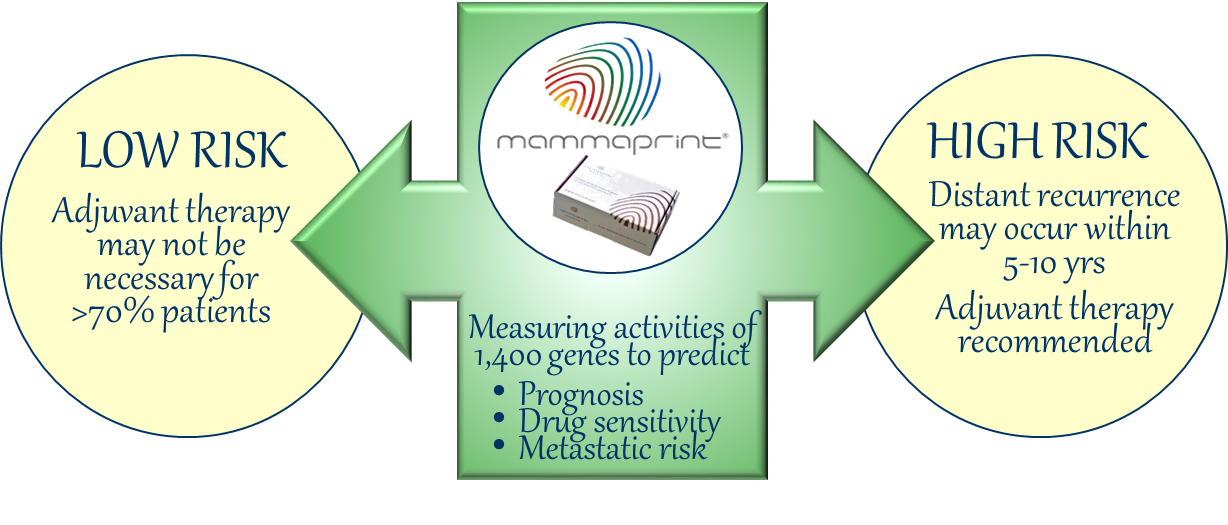
Secondly, one thing that attracts me most about cancer research is the incredibly fast pace the field is moving. Cancer scientists and oncologists are always in the frontier of technology development and application. It is thus not surprising that the genomics and personalized medicine fields find their first home with oncology. In cancer treatment, personalized medicine makes use of various genetic biomarkers and diagnostic tests to identify tumor subtypes and predict an individual’s response to various therapies (See MammaPrint example below). This process is immensely helpful and cost-effective because it can predict which chemotherapies a patient is likely to respond or not respond to. Since genomics itself is a rather young field, there exist multiple barriers to wilder adoption of the relevant diagnostics. Among those barriers, lack of education and ambiguity about reimbursement are the two biggest factors. Until now, efforts for such education have been sparse and un-centralized. This is the problem we are tackling with BioInformative. BioInformative is a Portal where doctors, scientists and patients can contribute scientific information and reviews about these diagnostic tests. You can think of it as a hybrid of Wikipedia and Yelp, but instead of a dining experience, it’s for a life-saving cause. Anyone with first-hand experience with these tests is invited to review them – and that means YOU. We envision that guidelines for treatment and reimbursement policies will emerge naturally from this grass-roots movement.

MamaprintMammaPrint (offered by Agendia) is an example of the new class of genomic diagnostic tests. The major difference between these tests and previous genetic tests (like BRCA1) is in the scale. This new class of test can measure the activity of 1000+ genes or all genes in the genome. They can thus better characterize each individual tumor and offer more information for treatment choices.

There is much to be done in the race for the cure. You can walk for 3 days or type in the comfort of your own home. The latter option is less glamorous, but, in my opinion, is much more effective. Perhaps it is an excuse for my geeky self to hide behind my computer, but at the end of the day, we cannot buy tumors (actually we do, but they’re very expensive!) any more than we can buy lessons learned from other survivors. So, would you join me to be bioinformed?

Ann MorganAnn Mongan, PhD., is a cancer genomics scientist, mother of a silly baby boy, and wife to a radiologist. She has strong research interest in developing new cancer therapeutics and personalized medicine. You can find her other similar articles or reach her at www.bioInformative.com.

Elyn

~~If you don’t know your options, you don’t have any~~

Elyn Jacobs is a breast cancer survivor, professional cancer strategist, radio talk show host, speaker, and the Executive Director for the Emerald Heart Cancer Foundation. Elyn empowers women to choose the path for treatment that best fits their own individual needs. She mentors women who are coping with issues of well-being associated with breast cancer and its aftermath; she is passionate about helping others move forward into a life of health and wellbeing. Elyn has been featured on CNN Money, Talk About Health and more and has contributed to Breast Cancer Answers as well as written for the Pink Paper, Breast Cancer Wellness, Integrative Oncology Essentials, and she writes the Options for Life column for the Natural Healing-Natural Wellness Newsletter. Elyn lives in New York with her husband and two young boys.

Follow Elyn on Linkedin

Tune in to the Survive and Live Well Show

Replay the Survive and Live Well Radio Show archives

Follow Elyn on Facebook

Follow Survive and Live Well on Twitter

Donate to the Emerald Heart Cancer Foundation

Elyn Jacobs Consulting Receives 2013 Best of Manhattan Award

In Uncategorized on August 22, 2013 at 9:48 pm

I am incredibly honored to have received a 2013 Best of Manhattan Award, an award given to small businesses in New York City who make a difference in the lives of those within as well as outside our community. Thank you Manhattan Award Program for selecting me for the 2013 Best of Manhattan Award.

Press Release:  Manhattan Award Program honors cancer coach Elyn Jacobs

MANHATTAN August 14, 2013 — Elyn Jacobs Consulting, Incorporated has been selected for the 2013 Best of Manhattan Award in the Health Insurance category by the Manhattan Award Program.

2013 Manhattan AwardEach year, the Manhattan Award Program identifies companies that we believe have achieved exceptional marketing success in their local community and business category. These are local companies that enhance the positive image of small business through service to their customers and our community. These exceptional companies help make the Manhattan area a great place to live, work and play.

“Elyn Jacobs Consulting is honored to be recognized for service to those with cancer or looking to prevent cancer or its recurrence.   Helping each and every client find the path to wellness that best suits their needs is my top priority.  This would not be possible without the incredible doctors and medical experts who dedicate their lives to treating and healing the whole person, not just the disease of that person, and I am grateful for each and every one of them,” said Elyn Jacobs. ”

Elyn works tirelessly to empower people with the information they need to make the best possible choices for their cancer via education and one-on-one coaching within the tri-state area as well as globally. Learn how you can help prevent recurrence and minimize the treatment side effects and resulting effects that compromise your health and well-being. Visit Elyn at Elyn Jacobs Consulting Inc. Elyn also hosts a weekly radio show, Survive and Live Well to further support those looking for support and options.

“Many people do not realize that they have options when it comes to treatment.  My mission is to help clients find the best possible team and treatment for their particular cancer and needs.  I also know that it is not enough to treat cancer, we want to beat cancer and move on to a life of wellness. This involves finding the root cause and addressing that cause and not merely the symptom of cancer that presents. If we do not find the cause of our cancer, we cannot cure our cancer, “said Elyn.    

Various sources of information were gathered and analyzed to choose the winners in each category. The 2013 Manhattan Award Program focuses on quality, not quantity. Winners are determined based on the information gathered both internally by the Manhattan Award Program and data provided by third parties.

About Manhattan Award Program

The Manhattan Award Program is an annual awards program honoring the achievements and accomplishments of local businesses throughout the Manhattan area. Recognition is given to those companies that have shown the ability to use their best practices and implemented programs to generate long-term value.

The Manhattan Award Program was established to recognize the best of local businesses in our community. Our organization works exclusively with local business owners, trade groups, professional associations and other business advertising and marketing groups. Our mission is to recognize the small business community’s contributions to the U.S. economy.

SOURCE: Manhattan Award Program
Email: PublicRelations@awardprogram.org
URL: http://www.awardprogram.org

Elyn

~~If you don’t know your options, you don’t have any~~

Elyn Jacobs is a breast cancer survivor, professional cancer coach, radio talk show host, speaker, and the Executive Director for the Emerald Heart Cancer Foundation. Elyn empowers women to choose the path for treatment that best fits their own individual needs. She mentors women who are coping with issues of well-being associated with breast cancer and its aftermath; she is passionate about helping others move forward into a life of health and wellbeing. Elyn has been featured on CNN Money, Talk About Health and more and has contributed to Breast Cancer Answers as well as written for the Pink Paper, Breast Cancer Wellness, Integrative Oncology Essentials, and she writes the Options for Life column for the Natural Healing-Natural Wellness Newsletter. Elyn lives in New York with her husband and two young boys.

Follow Elyn on Linkedin

Tune in to the Survive and Live Well Show

Replay the Survive and Live Well Radio Show archives

Follow Elyn on Facebook

Follow Survive and Live Well on Twitter
Donate to the Emerald Heart Cancer Foundation