Ozempic has gained significant popularity as a weight loss aid. However, its side effects are substantial, prompting many to seek alternative solutions. One such natural substance is butyrate, which supports metabolism in a similar manner to Ozempic. The journey begins in the gut, where butyrate plays a pivotal role.
Ozempic falls within the class of drugs known as GLP-1 receptor agonists. These medications mimic the body’s process of stimulating the pancreas to release insulin and slow down gastric emptying, which helps suppress appetite. GLP-1, a hormone, regulates blood sugar levels and delays stomach emptying, potentially aiding in reduced food intake.
Butyrate, on the other hand, offers a multitude of benefits. It supports the gut lining, combats leaky gut syndrome, aids digestion, and promotes a healthy inflammation response and microbiome. These benefits collectively enhance overall health and, importantly, support metabolism and weight management.
Butyrate and Cancer
Butyric acid, a short-chain fatty acid, offers numerous benefits that extend beyond weight management. Its anticancer properties are particularly noteworthy. By demonstrating marked anti-tumor effects, butyric acid plays a significant role in inhibiting the development and growth of cancer cells. Its robust anti-inflammatory properties further contribute to overall health by supporting the integrity of the gut lining, thus repairing and protecting against conditions such as leaky gut.
Additionally, butyric acid is instrumental in improving insulin resistance and managing blood sugar levels, thereby contributing to metabolic health. It aids in the regulation of hunger and satiety, promoting healthy weight. The immune function is also bolstered by butyric acid, making it a vital component in maintaining overall well-being. Furthermore, it facilitates the metabolism of estrogens, adding another layer of health benefits. Embracing natural compounds like butyric acid can be a powerful adjunct in the pursuit of optimal health and cancer prevention.
In conclusion, while Ozempic may offer rapid weight loss, natural alternatives like butyrate provide a holistic approach to health and metabolism without the considerable side effects. It is essential to be informed and aware of all available options before making health decisions.
You can get butyrate in your diet by consuming certain hard cheeses, grass-fed butter or ghee, or take a supplement.
Yours in good health,
Elyn
Elyn Jacobs is a breast cancer survivor and holistic cancer strategist who helps people make healthier, less-toxic choices for their healing. She emphasizes the importance of not just surviving cancer but surviving well and reducing the risk of recurrence. Elyn is on the Board of Directors for the Appleseed Project and is on the Medical Advisory Board for BeatCancer.Org. and the Advisory Board to the Radical Remission Project. She was a Contributing Editor for The Truth About Cancer and has written for numerous journals and publications. She was the former Executive Director of the Emerald Heart Cancer Foundation and the creator and host of the Survive and Live Well Radio Show. To contact Elyn, visit www.elynjacobs.com. Elyn offers consults via Skype, phone, or in-person. Elyn does not provide online advice.
DISCLAIMER: Elyn Jacobs does not provide medical advice. The information provided is for general information only. No online site should be used as a substitute for personal medical attention.
This information is for educational purposes only and is not a recommendation to forgo medical advice and treatment. This post is not intended to treat, cure, prevent, or diagnose any disease or condition. This post does not represent medical advice, nor should it be considered to be medical advice or a replacement for medical advice. I encourage you to discuss this information with your integrative oncologist, naturopathic doctor, or conventional oncologist. The information provided is from my research and not to be taken as scientific evidence. Elyn Jacobs Consulting, Inc. does not provide endorsement for the content, claims, or products discussed in this article.
Affiliate Links Disclosure:
Some product links on some posts are affiliate links. This website is monetized in part using affiliate links. This means that if you were to click on a link that is an affiliate link and purchase an item after clicking on that link, I may receive a small percentage of the sales price. I only recommend products that I love and use often. Thank you for your support!
Welcome to THE Cancer Wellness Revolution. Join us for the 2025 Appleseed Project CAM Conference February 26th through March 1st in beautiful West Palm Beach, Florida.
View my interview with Geralyne Lewandowski on The Ladies Room, Local TV Easthampton NY.
CAM (Complimentary and Alternative Medicine- or as I like to say, Methods) is vital in the healing of cancer. CAM is not widely used by conventional professionals, yet has been found to improve the efficacy of conventional treatments and lessen the side effects of said treatments. Alternative, or holistic methods provide for those who have decided against certain conventional treatments.
Learn from experts hailing from all over the world to bring to you options you might never have imagined! As I always say, if you don’t know your options, you don’t have any!
USE THIS LINK TO REGISTER: USE DISCOUNT CODE ELYN to save 10%.
View my live interview as I speak about the conference and the benefits of CAM on Local TV Easthampton NY: Elyn Jacobs Channel 20 LTV
Have a look at the speaker line up. A few highlights include: Jane McLelland, Monisha Bttanote, M.D., Jenn Simmons, M.D., Petra Sovcov, DNM, CHT, and energy medicine- mind body expert Sarah Lascano.
In addition to our line up of speakers, there will be 24 ‘Round tables” which are done classroom-style where the speaker ‘teaches’ for a while and then attendees are invited to ask questions. My topic with be Natural Alternatives to Tamoxifen and Aromatase Inhibitors, but will delve into the role of estrogen in certain breast cancers. Specifically, I will address the elephant in the room:
Should we or should we not take estrogen blockers if we have or have had breast cancer? Does estrogen really fuel breast cancer? Well, the answer is yes and no and perhaps maybe to both of those questions.
This conference will open your eyes to the true root causes of cancer and for hormone positive breast cancers, you will learn, among so many other things, why your own hormones are not always your enemy.
Enjoy two continental breakfasts, three delicious organic vegan lunches and one lovely evening poolside welcome reception. There will be ample time to speak intimately with the speakers, so do take advantage of that. If you are a hotel guest, a full breakfast is included as well as plenty of amenities such as a pool and gym.
I look forward to seeing you all there!
Can’t Make It In Person This Year? We’ve Got You Covered! Join Us Via Live Streaming! (Details via the Conference Link) Use Code Elyn for a 10% discount.
Scholarships are available for up to 50 people with active cancer; see the Appleseed Website for details.
The Annie Appleseed Project Conference is an accredited conference. 5 CME/CEU – PRA Category 1.
The Appleseed Project is the only organization that Provides one-on-one phone and email support and referrals to our ambassadors, doctors, and partners. We’ve built a global network of doctors, practitioners and ambassadors who offer pro bono consults and education. Come meet the team in West Palm Beach, February 2025!
Our Cancer Wellness Revolution is a Global Movement to bring Hope in Healing to a hurting world where cancer rates are rising in the top 7 categories up 300-900% in the past 3 years and average age on onset is 30-40 and as low as 13. Our phones never stop ringing.
Conference registration & speaker list: Appleseed Project (appleseedprojectconference.com) <https://appleseedprojectconference.com/> Use Code Elyn for a 10% discount.
~~If you don’t know your options, you don’t have any~~
Elyn Jacobs is a breast cancer survivor and holistic cancer strategist who helps people make healthier, less-toxic choices for their healing. She emphasizes the importance of not just surviving cancer but surviving well and reducing the risk of recurrence. Elyn is on the Board of Directors for the Appleseed Project and is on the Medical Advisory Board for BeatCancer.Org. and the Advisory Board to the Radical Remission Project. She was a Contributing Editor for The Truth About Cancer and has written for numerous journals and publications. She was the former Executive Director of the Emerald Heart Cancer Foundation and the creator and host of the Survive and Live Well Radio Show. To contact Elyn, visit www.elynjacobs.com. Elyn offers consults via Skype, phone, or in-person. Elyn does not provide online advice.
DISCLAIMER: Elyn Jacobs does not provide medical advice. The information provided is for general information only. No online site should be used as a substitute for personal medical attention.
This information is for educational purposes only and is not a recommendation to forgo medical advice and treatment. This post is not intended to treat, cure, prevent, or diagnose any disease or condition. This post does not represent medical advice, nor should it be considered to be medical advice or a replacement for medical advice. I encourage you to discuss this information with your integrative oncologist, naturopathic doctor, or conventional oncologist. The information provided is from my research and not to be taken as scientific evidence. Elyn Jacobs Consulting, Inc. does not provide endorsement for the content, claims, or products discussed in this article.
Affiliate Links Disclosure:
Some product links on some posts are affiliate links. This website is monetized in part using affiliate links. This means that if you were to click on a link that is an affiliate link and purchase an item after clicking on that link, I may receive a small percentage of the sales price. I only recommend products that I love and use often. Thank you for your support!
~~If you don’t know your options, you don’t have any~~
Elyn Jacobs is a breast cancer survivor and holistic cancer strategist who helps people make healthier, less-toxic choices for their healing. She emphasizes the importance of not just surviving cancer but surviving well and reducing the risk of recurrence. She was a Contributing Editor for The Truth About Cancer and is on the Medical Advisory Board for BeatCancer.Org, the Advisory Board to the Radical Remission Project and the Annie Appleseed Project. Elyn has written for numerous journals and publications. She was the former Executive Director of the Emerald Heart Cancer Foundation and the creator and host of the Survive and Live Well Radio Show. To contact Elyn, visit www.elynjacobs.com. Elyn offers consults via Skype, phone, or in-person. Elyn does not provide online advice.
DISCLAIMER: Elyn Jacobs does not provide medical advice. The information provided is for general information only. No online site should be used as a substitute for personal medical attention.
This information is for educational purposes only and is not a recommendation to forgo medical advice and treatment. This post is not intended to treat, cure, prevent, or diagnose any disease or condition. This post does not represent medical advice, nor should it be considered to be medical advice or a replacement for medical advice. I encourage you to discuss this information with your integrative oncologist, naturopathic doctor, or conventional oncologist. The information provided is from my research and not to be taken as scientific evidence. Elyn Jacobs Consulting, Inc. does not provide endorsement for the content, claims, or products discussed in this article.
Affiliate Links Disclosure:
Some product links on some posts are affiliate links. This website is monetized in part using affiliate links. This means that if you were to click on a link that is an affiliate link and purchase an item after clicking on that link, I may receive a small percentage of the sales price. I only recommend products that I love and use often. Thank you for your support!
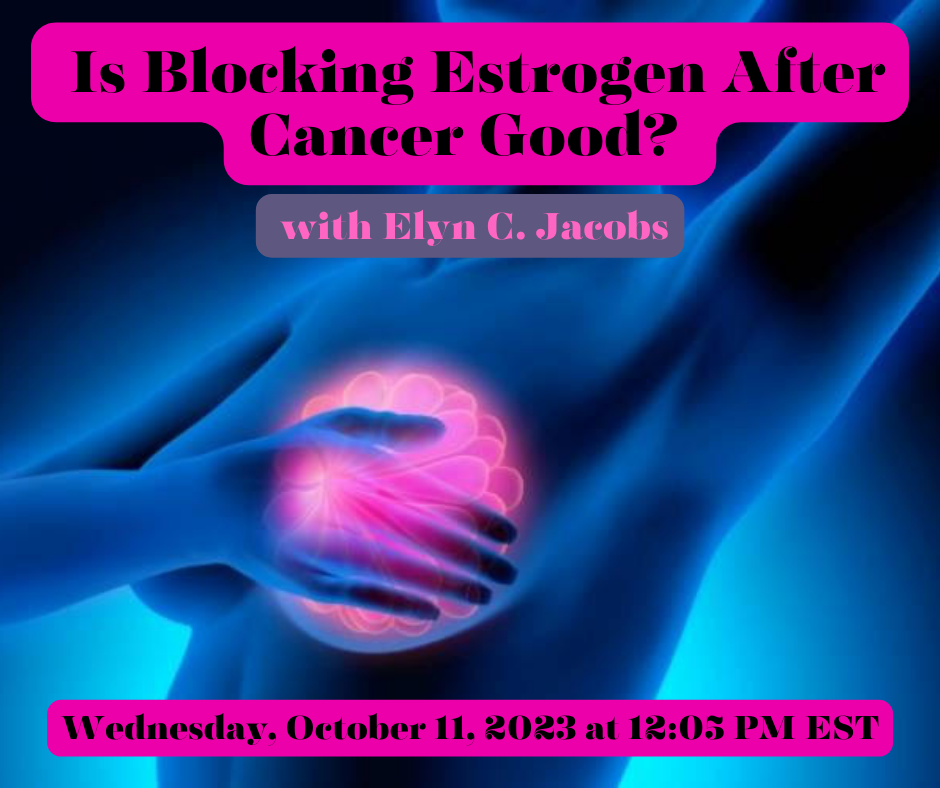
Should we or should we not take estrogen blockers if we have or have had breast cancer? Well, the answer is yes and no and perhaps maybe. Whether or not to take hormone blockers such as aromatase inhibitors is a huge decision many women diagnosed with breast cancer face. Lilly and I discussed this on her show, the Lillian McDermott Classroom. If you missed this conversation, you can replay it here: Is Blocking Estrogen After Cancer Good? Below is some additional information on the subject.
Is Estrogen Guilty?
Let’s talk about estrogen and reality. If estrogen really caused breast cancer, we would see far more breast cancer in young premenopausal women than postmenopausal, right?
While many doctors stress to their patients with hormone positive breast cancers that estrogen is fueling their cancer, let’s look at this logically. If our own estrogen was the real or only culprit, why is breast cancer more prevalent in postmenopausal women who certainly have lower estrogen levels then younger premenopausal women? And we would certainly see more breast cancer in pregnant women or those with young children, right? While those rates are rising, it is most likely due to chemical estrogens, not our own, as well as genetic mutations and other powerful drivers such as emotional traumas—but I’ll step away from that topic for now.
Estrogen receptors are on all breast cells, and are stimulated by estrogen, particularly in the absence of progesterone. It is true that when there is breast cancer there’ll be more estrogen receptors. But and this is a big but.
Typically, it is not so much our own estrogen that is sitting on these receptors, but rather the xenoestrogens that are doing the nasty deed. These include chemical estrogens found in self-care, beauty, plastics, paper products, cash register receipts, cleaning products, and the like. If we can eliminate those as best as we can, we severely reduce the toxic load of chemical estrogens that can accelerate cell proliferation. And since we might not be able to avoid everything, it might be helpful to block the receptors (but that doesn’t have to mean tamoxifen, which is considered to be carcinogenic and a form of chemo). Consuming phytoestrogens such as flaxseed, tahini (sesame seeds), and non GMO, organic whole-food soy can help block receptors.
Weight Matters
Postmenopausal women who are overweight, particularly in the belly area, often have increased levels of circulating estrogen. This is because when you are premenopausal most of your estrogen is made by the ovaries, but when you are postmenopausal, a little bit is made by the adrenals and then it is also made in fat cells, including those in the belly and breast. What this means is that a postmenopausal woman who is overweight will have a higher risk of breast cancer than a normal weight postmenopausal woman or premenopausal woman.
To be clear, just because there’s more estrogen doesn’t mean that is the reason we find more cancer in postmenopausal. It may have more to do with the visceral fat that surrounds the abdominal organs which secretes pro-inflammatory chemicals that can spike breast cancer. Cancer loves belly fat.
Should You Take an Aromatase Inhibitor?
When confronted with the decision to take an aromatase inhibitor (AI), one must ask the question does this make sense? We are all told that AIs will extend life, but do they really? Als can damage the heart, brain, bones, eyes — so many things essential to quantity and quality of life. Given that the number one cause of death in women is heart disease, not cancer, it is wise to do one’s research before committing to these drugs.
So, what can we do? lose weight, eat healthy, reduce or eliminate grains if you need to. Eliminate gluten. Eliminate processed foods. Exercise and move your body throughout the day. Take the stairs, park far from your destination. Make many trips up and down your stairs. Garden, walk the dog. If you struggle with your weight then an AI might be right for you, even if it is only for a short time while you make some lifestyle changes. However, there are many natural substances that help both with weight management as well as inhibiting aromatase (see below).
Meanwhile, metabolising estrogen is super important (taking advantage of the benefits and excreting any excess). Raising progesterone appropriately to offset estrogen can also be helpful. And super important is resolving past and present emotional traumas. Suppressed traumas are, in my humble opinion, one of the biggest drivers of cancer, and no estrogen-reducing drug can fix this. Topics for another day.
To read about the potential harms of aromatase inhibitors and what other options you might have, please read Natural Alternatives to Aromatase Inhibitors. There are many alternatives to these toxic drugs.
Just a few cool facts:
Button mushrooms are natural aromatase inhibitors.
Many supplements are either natural AIs or help to metabolize and detoxify estrogen.
High blood levels of vitamin D are linked to reduced estrogen. D also reduces the number of estrogen receptors on breast cancer cells, making the cells less responsive to estrogens’ cancer-promoting signals.
Apigenin – found in parsley, celery, and chamomile—is an aromatase inhibitor and is a potent estrogen metabolizing compound. It also inhibits cancer growth and progression.
Vitex Fruit (Chaste Tree) may also be helpful to raise progesterone so that it can offset estrogen, particularly in premeno.
Leafy greens such as arugula have both anti-cancer and estrogen-blocking properties.
Apples contain insoluble fiber that binds to estrogen, preventing it from being absorbed in the body.
Coconut protects the liver from excess estrogen and other toxins.
Avocados help reduce the absorption of estrogen.
Grapes and red wine contain resveratrol and other polyphenols that are known to lower estrogen levels. The quercetin they contain also inhibits cancer growth.
Eggs help boost detox pathways and aid in the removal of excess estrogen.
Citrus fruits contain phytochemicals that act as antiestrogens and target estrogen receptors, helping to prevent the growth of cancer cells. The d-limonene in them (especially the peels) aids in detoxifying estrogen.
Olive oil is high in lutropin, a natural aromatase inhibitor.
Always remember that you and only you can determine the best treatment for your cancer. Your cancer, your body, your choice of treatment.
In your everlasting good health,
Elyn
~~If you don’t know your options, you don’t have any~~
Elyn Jacobs is a breast cancer survivor and holistic cancer strategist who helps people make healthier, less-toxic choices for their healing. She emphasizes the importance of not just surviving cancer but surviving well and reducing the risk of recurrence. She is a Contributing Editor for The Truth About Cancer and is on the Medical Advisory Board for BeatCancer.Org and the Advisory Board to the Radical Remission Project. Elyn has written for numerous journals and publications. She was the former Executive Director of the Emerald Heart Cancer Foundation and the creator and host of the Survive and Live Well Radio Show. To contact Elyn, visit www.elynjacobs.com. Elyn offers consults via Skype, phone, or in-person. Elyn does not provide online advice.
DISCLAIMER: Elyn Jacobs does not provide medical advice. The information provided is for general information only. No online site should be used as a substitute for personal medical attention.
This information is for educational purposes only and is not a recommendation to forgo medical advice and treatment. This post is not intended to treat, cure, prevent, or diagnose any disease or condition. This post does not represent medical advice, nor should it be considered to be medical advice or a replacement for medical advice. I encourage you to discuss this information with your integrative oncologist, naturopathic doctor, or conventional oncologist. The information provided is from my research and not to be taken as scientific evidence. Elyn Jacobs Consulting, Inc. does not provide endorsement for the content, claims, or products discussed in this article.
Affiliate Links Disclosure:
Some product links on some posts are affiliate links. This website is monetized in part using affiliate links. This means that if you were to click on a link that is an affiliate link and purchase an item after clicking on that link, I may receive a small percentage of the sales price. I only recommend products that I love and use often. Thank you for your support!
“Elyn, we could do lumpectomy with radiotherapy, but did you know that radiation can result in more cancer?” These were the words the first surgeon I went to see uttered during my consult (February 2007). Stunned, I told him I would not do it. He then explained that lumpectomy wasn’t really an option considering how much cancer was in my left breast and therefore made no sense to do lumpectomy and harmful radiation. But his words of warning will never be forgotten. I chose mastectomy, but with a different surgeon who also said mastectomy was the best choice (I just felt more comfortable with him and his associated hospital).
The question one needs to ponder is why would any doctor push a cancer-promoting therapy on a person with cancer? We all know that radiation is linked to cancer, and we all know that potentially and intentionally inflicting up to 3rd degree burns cannot be a good thing! (Read on to understand more on the harms and limitations of radiotherapy as well as chemotherapy.)
When I was diagnosed again in 2014 for stage 3 lymph node involvement, this time I was offered radiation and chemo. I declined both. My oncologist was relieved that I was declining the radiation. He suggested the chemo and when I declined, he offered low-dose chemo. I declined that too, which he was fine with. He had done his job of recommending the standard of care and backed it up with a letter to my surgeon stating I flat out refused. I embarked on a holistic protocol, which he fully supported.
So Why do Docs Recommend Radiation?
What you need to know too is that doctors and other medical professionals can lose their license to practice medicine if they fail to recommend anything other than the standard of care, meaning conventional cancer therapies such as chemo and radiation. These therapies are also part of their very limited toolbox as holistic therapies are typically not taught in medical school.
Sadly, radiation therapy is a huge profession (same for other cancer treatments), one that enthusiastic young medical students flock to. It’s what they are then trained to do and fall under the belief that they are doing good.
True, it is believed that radiotherapy that has the potential to reduce the risk of recurrence in the local area (not always but sometimes). However, no one dies of a local breast tumor, for example. And radiotherapy does nothing for the cancer stem cells, the only cancer cells that can metastasize (“mets”) to other areas such as the lungs, brain, and bones. Metastasis essentially shuts down essential organs and body systems (such as digestion, bones, lungs, liver, brain, etc.), resulting in death.[i] (Of course, the ‘treatment’ for mets is often chemotherapy, which also doesn’t target stem cells and is highly toxic to essential organs, again often resulting in death, particularly when given repeatedly).
But what these professionals do not tell you is that “Cancer stem cells (CSCs) comprise the subpopulation of tumor bulk and acquire resistant to conventional therapies and are considered as the primary tumor initiator cells. Nowadays, the tumor heterogeneity originated from CSCs, and its progenitors are accepted as a mortifying drawback in front of the cancer therapies.”[ii] Let that sink in. In layman terms, it means that CSCs are the reason that conventional treatments fail and encourage progression of the disease.
Radiation increases the risk of skin cancer in the treatment area.
Radiation to lymph nodes can cause damage to lymph nodes and lead to lymphedema.
Radiation treatment to the chest can affect the heart. You may be at a higher risk of cardiac (heart) issues if your breast cancer was in the left breast. Speak to your radiologist for breathing techniques that mitigate this risk.
Radiation can cause small cracks (fractures) in the bones that are in the treatment field.
Radiation to the chest or underarm area can experience damage to the brachial plexus nerve.
Radiation injury to the nerves and muscles is called radiation-induced neuropathy or radiation fibrosis. It tends to develop in the years following treatment and slowly worsens over time [i]
If you are considering radiation (or chemo), I strongly suggest you do your research first. And always work with an integrative professional or coach if you do choose these treatments. If you have had radiotherapy or chemo, I strongly suggest you move on and embrace the fact that you made the best choice you could at the time and meanwhile work on targeting the stem cells as well as the reasons for the original cancer.
To learn more about holistic remedies for cancer, please visit my website.
For Supplement information and brand recommendations, please visit my supplement page HERE.
Always remember that you and only you can determine the best treatment for your cancer. Your cancer, your body, your choice of treatment.
In your everlasting good health,
Elyn
~~If you don’t know your options, you don’t have any~~
Elyn Jacobs is a breast cancer survivor and holistic cancer strategist who helps people make healthier, less-toxic choices for their healing. She emphasizes the importance of not just surviving cancer but surviving well and reducing the risk of recurrence. She is a Contributing Editor for The Truth About Cancer and is on the Medical Advisory Board for BeatCancer.Org and the Advisory Board to the Radical Remission Project. Elyn has written for numerous journals and publications. She was the former Executive Director of the Emerald Heart Cancer Foundation and the creator and host of the Survive and Live Well Radio Show. To contact Elyn, visit www.elynjacobs.com. Elyn offers consults via Skype, phone, or in-person. Elyn does not provide online advice.
DISCLAIMER: Elyn Jacobs does not provide medical advice. The information provided is for general information only. No online site should be used as a substitute for personal medical attention.
This information is for educational purposes only and is not a recommendation to forgo medical advice and treatment. This post is not intended to treat, cure, prevent, or diagnose any disease or condition. This post does not represent medical advice, nor should it be considered to be medical advice or a replacement for medical advice. I encourage you to discuss this information with your integrative oncologist, naturopathic doctor, or conventional oncologist. The information provided is from my research and not to be taken as scientific evidence. Elyn Jacobs Consulting, Inc. does not provide endorsement for the content, claims, or products discussed in this article.
Affiliate Links Disclosure:
Some product links on some posts are affiliate links. This website is monetized in part using affiliate links. This means that if you were to click on a link that is an affiliate link and purchase an item after clicking on that link, I may receive a small percentage of the sales price. I only recommend products that I love and use often. Thank you for your support!
But what these professionals do not tell you is that “Cancer stem cells (CSCs) comprise the subpopulation of tumor bulk and acquire resistant to conventional therapies and are considered as the primary tumor initiator cells. Nowadays, the tumor heterogeneity originated from CSCs, and its progenitors are accepted as a mortifying drawback in front of the…
Strong Evidence On Bone Broth: Article shared from BrothMasters. Get 10%off first order.
Nutrients & Acid Reflux
Do you feel burning sensations in your chest after you eat?
How about difficulty swallowing, chronic sore throat, or hoarseness during the morning hours?
All of these can be symptoms of Gastroesophageal Reflux Disease (GERD), commonly known as Acid Reflux. People with GERD have a slightly higher risk of getting adenocarcinoma of the esophagus.
There are many possible causes of GERD –– ranging from:
Smoking
Laying down after eating
Too much pressure on the abdomen from pregnancy or being overweight
Consumption of dairy, spicy foods, fried foods, or caffeine (which relaxes muscles that allow stomach acid to travel up your esophagus)
Obviously, we’re not doctors, and we’re in no position to diagnose you with GERD or tell you how to treat it.
With that said, we’re always on the lookout for solid studies that point towards relief. (Especially when they involve nutrients in bone broth.)
That’s why we were intrigued by a 2013 randomized controlled trial published in the European Review for Medical and Pharmacological Sciences.
Normally, when you are suffering from GERD, the doctor might suggest a Proton Pump Inhibitor (such as Prilosec) to lower the amount of acid your stomach makes.
However, for individuals with a unique form of reflux called non-erosive reflux disease (NERD) that common treatment doesn’t work very well.
So –– for this study –– researchers gathered 20 patients who were experiencing these stubborn NERD symptoms.
10 of them were given a placebo for the 14-day study. The others were given a melt-in-mouth adhesive strip containing Hyaluronic Acid and Chondroitin Sulfate (which are nutrients found in bone broth.)
The results were impressive:
Two weeks later, every patient taking the HA+CS treatment saw a significant reduction in the intensity of their heartburn and acid regurgitation symptoms.
And 50% saw their reflux symptoms disappear altogether.
By comparison, only 10% of patients who took the placebo saw their symptoms disappear.
60% of the treatment patients also felt it taking action in under 30 minutes –– versus just 30% of the placebo group.
The researchers concluded: “A fixed combination of HA + CS has demonstrated to be effective in gastroesophageal reflux control, with a rapid onset of action.”
Now, we can’t necessarily extrapolate the results of this study (which, again, used a melt-in-mouth adhesive strip) to bone broth.
For that, we would need a study that specifically tested bone broth: something that has never been done.
Meanwhile, I (Elyn) would like to add that the gelatin in bone broth supports healthy digestion. Importantly, bone broth helps repair the lining of your gut, which is something we hear about all of the time now. Gut health=overall health. Leaky gut is the root cause of autoimmune disorders and many cancers. Read more HERE. Order Bone Broth HERE.
BrothMasters
What we can tell you is that every pouch of BrothMasters contains meaningful amounts of Hyaluronic Acid and Chondroitin Sulfate. In fact, we use grass fed and pasture-raised bones and simmer them for 48 hours to get those exact nutrients into the broth for you.
And we often hear from customers after they put it to the test:
“The best broth you can buy! I have one or two cups of broth per day and I love it. It has a rich, homemade taste that is far superior to any other broth on the market. I have struggled with acid reflux for years and it is much improved after adding this broth to my daily routine.” – Donna B
I love this broth, hope you do as well. A sprinkle of Celtic sea salt and can be enjoyed simply warmed up or can be used instead of regular broth in soups and stews.
In your everlasting good health,
Elyn
~~If you don’t know your options, you don’t have any~~
Elyn Jacobs is a breast cancer survivor and holistic cancer strategist who helps people make healthier, less-toxic choices for their healing. She emphasizes the importance of not just surviving cancer but surviving well and reducing the risk of recurrence. She is a Contributing Editor for The Truth About Cancer and is on the Medical Advisory Board for BeatCancer.Org and the Advisory Board to the Radical Remission Project. Elyn has written for numerous journals and publications. She was the former Executive Director of the Emerald Heart Cancer Foundation and the creator and host of the Survive and Live Well Radio Show. To contact Elyn, visit www.elynjacobs.com. Elyn offers consults via Skype, phone, or in-person. Elyn does not provide online advice.
DISCLAIMER: Elyn Jacobs does not provide medical advice. The information provided is for general information only. No online site should be used as a substitute for personal medical attention.
This information is for educational purposes only and is not a recommendation to forgo medical advice and treatment. This post is not intended to treat, cure, prevent, or diagnose any disease or condition. This post does not represent medical advice nor should it be considered to be medical advice or a replacement for medical advice. I encourage you to discuss this information with your integrative oncologist, naturopathic doctor, or conventional oncologist. The information provided is from my research and not to be taken as scientific evidence.
Important Disclaimer: Elyn Jacobs Consulting, Inc. does not provide endorsement for the content, claims, or products discussed in this article. This information is for educational purposes only and is not a recommendation to forgo medical advice and treatment.
Affiliate Links Disclosure:
Some product links on some posts are affiliate links. This website is monetized in part through the use of affiliate links. This means that if you were to click on a link that is an affiliate link and purchase an item after clicking on that link, I may receive a small percentage of the sales price. I only recommend products that I love and use often. Thank you for your support!
Progesterone is vital to the female body, yet many women fear it. Progesterone is the key to many aspects of female health, and often thought of as one of the most important hormones. But most women have very low levels of progesterone which can result in estrogen dominance and can significantly increase one’s risk of breast cancer!
In short, estrogen and progesterone work in tandem. The former hormone helps cancerous cells flourish while the latter puts the brakes on cell growth and proliferation.
Why You NEED Progesterone
Progesterone is the precursor to other important hormones, including estrogen and testosterone. These hormones play a significant role in female health, influencing everything from cognitive function, menopause, fertility, helping the uterus to grow during pregnancy, normal breast development during puberty, and so much more, including breast cancer prevention. Importantly, the body depends on the right balance of these hormones in order to function properly.
“Estrogen can cause cells to grow or proliferate, but progesterone decreases proliferation/cell growth while encouraging cells to become more specialized or mature, so in effect, progesterone’s actions decrease cancer risk. When progesterone is present, its receptors make the estrogen receptor no longer able to cause breast cells to grow or proliferate.”[i] (The Centre for Menstrual Cycle and Ovulation Research). More on receptors below.
Natural progesterone is not to be feared. In fact, it is widely believed that estrogen can only fuel breast cancer in the absence of progesterone. In essence, progesterone puts the brakes on cell proliferation and growth. Estrogen should also not be feared and is actually essential for so many reasons (heart, bone, and eye health, etc.) The Important thing is to help your body metabolize estrogen properly so the body can use what it needs and excrete the excess ( a topic beyond the scope of this article).
The confusion about progesterone comes from studies using progestin (synthetic progesterone). Progestins are NOT the same thing as progesterone. But again, one of progesterone’s jobs is to decrease the risk for breast cancer. It does that by decreasing the proliferation often caused by excess estrogen.
Importantly, chemical estrogens (also known as xenoestrogens) such as BPA (bisphenol A) and other chemicals often found in home and personal care items are another story. They DO fuel breast cancer. For more information on the damages of BPA and BPS please read: BPA: The Bathroom Toxin that Fuels Breast Cancer.
Symptoms of Progesterone Deficiency Include:
Unexplained fatigue and low energy
Intense PMS symptoms such as cramps and moodiness
Dizziness
Difficultly sleeping
Irritability
Ovarian cysts
Fibrocystic breasts
Mood swings
Hot flashes
Low libido
Irregular menstrual cycles
Weight gain
Fibroids
Endometriosis
Thyroid dysfunction
Infertility and miscarriage
Uterine bleeding
Breast and other cancers
Some women have been progesterone-deficient most of their lives, whereas others find themselves in this predicament around age 45 or so, when the ovaries stop making the hormones estrogen and progesterone and turn the job over to the adrenals. Regardless, it is imperative that we increase progesterone if it is low and in turn, balance the hormones. Clearly the list above gives you enough reasons.
Raising Progesterone
Foods that can help raise progesterone include broccoli and other cruciferous vegetables, beans, and nuts. Supplements include magnesium, and vitamin E (mixed tocopherols). Chaste Tree (Vitex) can also stimulate progesterone. Activated B6 is necessary for the synthesis of progesterone and helps the liver to metabolize and break down estrogen (B6 can also available in food sources such as leafy greens, peppers, carrots, asparagus, broccoli, walnuts, eggs, sweet potatoes, and sunflower seeds. For the carnivores, you can find it in grass-fed beef and beef liver). Zinc supports the production and use of progesterone. A deficiency in zinc increases estrogen sensitivity and decreases the progesterone response.
Things that deplete progesterone are stress and excessive exercise (which cause the body to produce stress hormones instead of progesterone).
Importantly, too much zinc will deplete copper. While copper can promote cancer, the body does need just a bit. Cooper deficiency can cause extreme tiredness, elevated cholesterol, brittle bones, increase risk of infection, and more.
A Note About Bio-Identical Progesterone
It is important to understand the difference between progesterone that is made by the body or is molecularly similar to one’s own natural progesterone and synthetic progesterone, which has been molecularly altered. This is why many women opt for bio-identical progesterone.
However, as discussed in a previous article, Could Aromatase Inhibitors Actually Increase One’s Risk for Breast Cancer prescription bio-identicals can be problematic. According to Dr Mache Seibel, M.D., author of The Estrogen Window, you must be careful with compounded bio-identicals. This is because sometimes the progesterone in compounded formulas can be 60-80% lower than ordered and estrogen 80-200% higher than ordered which can result in increased estrogen dominance. This could raise your risk of hormone-driven cancer.
Another option is bio-identical topical creams. There are a few good ones on the market, but one I use is Progesto-life. According to the instructions, you just rub a quarter teaspoon into your wrist or belly.
I strongly suggest you work with a qualified practitioner before beginning any type of bio-identical hormones. There is much we don’t know and some react differently than others. Please know that your oncologist might not be trained to discuss this with you.
Importantly, please do not confuse hormone levels with receptor status!
Hormones are your body’s chemical messengers. They travel in your bloodstream to tissues or organs to help them do their work.
Estrogen and progesterone receptors are proteins in cells that bind hormones and switch genes on and off, changing the cell’s behavior. Hormone receptor-positive breast cancers have many receptors, and the tumor cells become overly sensitive to estrogen. When estrogen activates the estrogen receptor, it signals the genes that tell the cells to keep dividing, driving tumor growth. However, when breast cancer cells have working progesterone receptors, and there is sufficient progesterone available, progesterone will slow down estrogen fueled growth and division of these cells.
The late John Lee, MD, author of What Your Doctor May Not Tell You About Breast Cancer maintained that when activated by progesterone, its receptors attach themselves to estrogen receptors. This tells the genes that promote growth to pivot and instead promote the death of cancer cells.
A study published in the Dec 2016 edition of the journal Nature, led by Cambridge-based Cancer Research U.K. researcher Dr. Jason Carroll of the University of Adelaide in Australia found that progesterone –via the progesterone receptor– reprograms the estrogen receptor, causing the cells to stop growing as quickly. For more information, please read my article, Progesterone and Breast Cancer.
So, if you are ER and or PR positive it simply means you have receptors for these hormones. It does not mean you have high levels of either hormone. In fact, most doctors recommend tamoxifen or aromatase inhibitors without even testing hormone levels, which could be a big mistake (particularly in the case of aromatase inhibitors).
For those who have or have had TNBC (triple negative breast cancer), progesterone has been found to inhibit this type of cancer as well.
This article is a re-write from a previous article of mine published in January 2020.
In your everlasting good health,
Elyn
~~If you don’t know your options, you don’t have any~~
Elyn Jacobs is a breast cancer survivor and holistic cancer strategist who helps people make healthier, less-toxic choices for their healing. She emphasizes the importance of not just surviving cancer but surviving well and reducing the risk of recurrence. She is a Contributing Editor for The Truth About Cancer and is on the Medical Advisory Board for BeatCancer.Org and the Advisory Board to the Radical Remission Project. Elyn has written for numerous journals and publications. She was the former Executive Director of the Emerald Heart Cancer Foundation and the creator and host of the Survive and Live Well Radio Show. To contact Elyn, visit www.elynjacobs.com. Elyn offers consults via Skype, phone, or in-person. Elyn does not provide online advice.
DISCLAIMER: Elyn Jacobs does not provide medical advice. The information provided is for general information only. No online site should be used as a substitute for personal medical attention.
This information is for educational purposes only and is not a recommendation to forgo medical advice and treatment. This post is not intended to treat, cure, prevent, or diagnose any disease or condition. This post does not represent medical advice nor should it be considered to be medical advice or a replacement for medical advice. I encourage you to discuss this information with your integrative oncologist, naturopathic doctor, or conventional oncologist. The information provided is from my research and not to be taken as scientific evidence.
Important Disclaimer: Elyn Jacobs Consulting, Inc. does not provide endorsement for the content, claims, or products discussed in this article. This information is for educational purposes only and is not a recommendation to forgo medical advice and treatment.
Affiliate Links Disclosure:
Some product links on some posts are affiliate links. This website is monetized in part through the use of affiliate links. This means that if you were to click on a link that is an affiliate link and purchase an item after clicking on that link, I may receive a small percentage of the sales price. I only recommend products that I love and use often. Thank you for your support!
I will be on the Lillian Mc Dermott Radio show, When You Need a Friend, today at 12:05 pm EST. The show will be live at 12:05pm EST, on both Facebook and YouTube. Hope to see you there!
Also, I have started a new private group on Facebook, Cancer Coach Elyn. If interested, you can visit it HERE. Please do not forget to answer the group questions if you would like to join.
Elyn
~~If you don’t know your options, you don’t have any~~
Elyn Jacobs is a breast cancer survivor and holistic cancer strategist who helps people make healthier, less-toxic choices for their healing. She emphasizes the importance of not just surviving cancer but surviving well and reducing the risk of recurrence. Elyn specializes in understanding the role of estrogen in breast cancer and debunks the myths associated. She is a Contributing Editor for The Truth About Cancer and is on the Medical Advisory Board for BeatCancer.Org and the Advisory Board to the Radical Remission Project. Elyn has written for numerous journals and publications. She was the former Executive Director of the Emerald Heart Cancer Foundation and the creator and host of the Survive and Live Well Radio Show. To contact Elyn, visit http://www.elynjacobs.com. Elyn offers consults via Skype, phone, or in-person. Elyn does not provide online advice.
DISCLAIMER: Elyn Jacobs does not provide medical advice. The information provided is for general information only. No online site should be used as a substitute for personal medical attention.
This information is for educational purposes only and is not a recommendation to forgo medical advice and treatment. This post is not intended to treat, cure, prevent, or diagnose any disease or condition. This post does not represent medical advice, nor should it be considered to be medical advice or a replacement for medical advice. I encourage you to discuss this information with your integrative oncologist, naturopathic doctor, or conventional oncologist. The information provided is from my research and not to be taken as scientific evidence.
Some product links on some posts are affiliate links. This website is monetized in part using affiliate links. This means that if you were to click on a link that is an affiliate link and purchase an item after clicking on that link, I may receive a small percentage of the sales price. I only recommend products that I love and use often. Thank you for your support!
Natural alternatives to anti-hormone therapies have been well-known for a long time. Oncologists are often hesitant to recommend them as they are required to stick to the ‘standard of care’ (SOC), which limits them to drugs such as tamoxifen or aromatase inhibitors. That does not mean they are not aware that there are alternatives that can be as good or even better than pharmaceutical drugs. However, alternatives are typically not taught in medical school and your doctor may not feel comfortable in recommending them even if s/he could.
So, what can you do?
There are many things you can do to balance your hormones naturally and minimize the cancerous effects of your own estrogen and more importantly, the chemical estrogens in your world. Chemical estrogens (xeno-estrogens) may include but are not limited to chemicals such as BPA (bisphenol A) as would be found in beauty and home products, weed killers, insecticides, and pesticides (especially glyphosate). Oral contraceptives, cash register receipts, plastics, and paper products such as toilet paper and paper towels are also problematic. When too many of these aggressive estrogen molecules occupy estrogen receptor sites, this is when cancer can grow. The first and foremost thing to do is to get these things out of your life as much as possible. Buy organic foods, free of pesticides and GMOs whenever possible. Aim for a variety of 8-10 servings of vegetables and 2-4 servings of fruit daily. Limit processed and packaged foods and use only clean home and personal care products.
Certain nutrients, botanicals, and nutrient compounds impact the body’s ability to process toxins. Top choices are cruciferous vegetables, garlic, onions (red, white, chives, leeks, scallions, and shallots), parsley, leafy greens, turmeric, berries, lemon water, green tea, beets, flax seeds, and artichokes. Consume these regularly to support your body’s natural detoxification systems. Drinking pure water and sweating are very helpful too!
For information about helpful supplements for estrogen management and detoxification, visit the Supplement Page on my website or request my handouts.
A number of nutrients, botanicals, and nutrient compounds have varying effects on the cancerous process. You may have been told by your doctor to avoid phytoestrogens (plant estrogens), but these substances can inhibit breast cancer! Phytoestrogens are plant compounds with a similar molecular shape and structure to endogenous estrogen molecules. Phytoestrogens such as flax and sesame seeds work like SERMS (selective estrogen receptor modulators) such as tamoxifen. They modulate the effects of estrogen in the body by connecting to their receptors (just as tamoxifen does) thus inhibiting cancer cell replication.
Seeds such as flax and sesame contain lignans, molecules that bind to estrogen receptors just like tamoxifen. Binding turns on, or activates, a hormone receptor. Activation sets in motion cell signaling systems that trigger gene expression. In other words, phytoestrogens are similar enough to estrogen that they can bind to estrogen receptors, but cancer cells cannot use them in the same way as your own natural estrogen or chemical estrogens (they are far less potent). Lignans activate far weaker than your own estrogen or chemical estrogens. What this means is that they cannot stimulate breast cells to divide. They ‘park’ on the estrogen receptors, essentially blocking harmful estrogens from being able to bind to that receptor and do the dirty deed.
Further, flax and sesame seeds reduce tumor growth by increasing cell death and decreasing angiogenesis (the growth of new blood vessels that allow cancer to advance). Flaxseed has also been found to knock down (inhibit) CYP1B1, an enzyme that plays a role in estrogen metabolism. CYP1B1 converts estrogen to the less favorable metabolites. CYP1B1 also tends to make environmental toxins more carcinogenic. It is expressed in ovarian, uterine, and breast tissues and is implicated in colon cancer as well.
Read more about the lignans in flax and sesame seed in my articles Demystifying Flaxseed and Estrogen and Gluten-Free Anticancer, Anti-inflammatory Seeded Flatbread.
Soy is another powerful phytoestrogen that only weakly interacts with receptors. Plus, for many people, the genistein in soy works hard to inhibit cancer growth factors. Soy is a bit more controversial as in some people it can interfere with thyroid function, so speak with your doctor before consuming it.
There are many other phytoestrogens that inhibit the estrogen-related cancerous process. I focused on the seeds and soy as the information on these can be confusing. Fennel, clove, citrus peels, clary sage, and myrrh are a few other good ones.
For women who have an over-abundance of natural estrogen (again, often a result of toxin overload, imparied estrogen metabolism, and chronic stress), reducing aromatase might be helpful. However, it is not necessary to rely on pharmaceutical aromatase inhibitors (loaded with terrible side effects) to lower the production of aromatase (which produces estrogen). Eat foods such as button mushrooms, celery and parsley (rich in apigenin), rosemary, citrus peel, pumpkin seeds, and flaxseed. Supplements such as D3, DIM, vitamin K2, calcium D-glucarate, zinc, grapeseed extract, gingko biloba, myomin, chrysin, red wine, and sea cucumber are natural aromatase inhibitors as well.
Importantly, many women do not need to and should not reduce estrogen, particularly if they have extremely low levels. I caution you not to severely inhibit estrogen, either by holistic or pharmaceutical means. Low estrogen contributes to osteoporosis, heart disease, ocular damage[i], and so much more. Sadly, doctors often order aromatase inhibitors for people without even testing hormone levels.
That said, even if estrogen levels are low, it is still essential to metabolize and excrete estrogen, the way nature intended to be.
Of note, DIM helps with phase 1 liver detoxification, so the toxins and hormones will be broken down and eliminated. However, without an active phase ll pathway, these toxins could get recirculated in the body, rather than being eliminated. When you combine DIM (or Indole-3-carbinol) with sulforaphane and calcium D- glucarate, the nutrients help the liver complete the detox process and eliminate the excess estrogen from the body.
Estrogen is NOT always the Problem
All of that said, estrogen is NOT always the problem. Most people who suffer from hormone imbalance are deficient in progesterone. Progesterone sort of puts the brakes on estrogens’ cancerous activity. While you can use a progesterone cream or perhaps use bioidentical, I would encourage you to try to balance your hormones with diet and supplements.
Things that help raise progesterone are stress reduction, zinc, thyme, vitamin C, magnesium, cruciferous vegetables, vitamin E, Chaste Tree (Vitex), and activated B6 (also available in food sources such as leafy greens, peppers, carrots, asparagus, broccoli, walnuts, eggs, sweet potatoes, and sunflower seeds. For the carnivores, you can find it in grass-fed beef and beef liver). Activated B6 is necessary for the synthesis of progesterone. It is also necessary for the liver to metabolize and break down estrogen, which can help reduce estrogen dominance. You can find activated B6 here at Amazon or at your local drugstore.
Estrogen Metabolism and Methylation
Estrogen metabolism and methylation play a role in hormone-sensitive cancers. To control the level of estrogen in the body, we need a way to break it down and eliminate it. This is mostly done by the liver, where enzymes create metabolites, known as catechol estrogens, that can either be favorable or less favorable for estrogen metabolism. Supplements such as DIM, Indole-3-Carbinol and Calcium-d-glucarate (not calcium) support healthy metabolism and elimination of estrogen. That said, not everything is right for everyone, so you may want to do some testing to see what works best for you.
A simple blood test is one option if you just want an idea of your hormone levels. However, because hormone levels vary day to day as well as throughout the day, a blood test may not accurately reflect hormone levels. It will also not provide information regarding methylation and pathways. But it is a start.
Saliva tests are another option, which are believed to test hormones at the cellular level, as opposed to the blood test with measures the level of hormones circulating in the blood stream. You can purchase home kits. See my supplement page if you need recommendations.
The Dutch Test can give you a baseline measurement of hormonal imbalances. It will show you what your estrogen profile looks like and what pathway the estrogens are headed down. Among a lot of other things, it will show methylation and even if things such as DIM, for example, are working for you or against you. For more information see their website.
The Nutrition Genome Test looks at the genetic gene mutations (inherited DNA alterations) you may have been born with that could be affecting estrogen metabolism and driving the growth of cancer.
For example, COMT is a gene that plays a role in methylation and estrogen metabolism. If you have variants of this gene, you might have sluggish methylation. However, it does not affect everyone the same way and can be driven by diet and lifestyle choices, stress, and exposure to environmental toxins such as cigarette smoke. ‘Healthy’ things such as quercetin, resveratrol, cilantro, green tea, and others can further slow COMT in some people and may need to be avoided. The supplement SAMe can help those with COMT, depending on your genetic makeup.
Genomic testing, like many other ‘tests’ is not right for everyone. If you believe you will be super-stressed by finding out what SNPs you have (DNA variants) then you might want to skip the tests. Most variants are quite common, so don’t freak out if you have one or even all of the variants linked to cancer. Lots of things are linked to cancer.
Our gut, brain, and bodies in general are often the most powerful test. Listen to your gut –it is trying to tell you something. Connect with yourself and do not go with what others are doing just for the sake of following the crowd.
Estrogen that has been metabolized and is ready to be eliminated through feces can be recycled back into circulation either due to chronic constipation or an interaction with certain bacteria in the gut, such as beta-glucuronidase. Calcium d-glucarate suppresses beta-glucuronidase helping you excrete the estrogen metabolites. Adding more fruits and vegetables may help ease constipation.
So, you can see that estrogen is far more complicated with respect to its role in cancer than you may have been led to believe. Hormones can be very confusing!! Importantly, estrogen and progesterone levels are not to be confused with receptor status!!! For more clarification on that, visit me in my private Facebook group Cancer Coach Elynas I post on this often, or schedule a consult with me.
There are many more substances that improve hormonal balance, stimulate the livers’ detoxification systems, and inhibit cellular proliferation, but if I listed them all this post would get too long. But, blocking estrogen is not the most important factor for many breast cancer patients. Addressing the cancerous terrain that may have allowed cancer to present is crucial. Chronic inflammation, GMOs, emotional and environmental toxins, viruses, obesity, and other factors are all involved.
The above information is not to be considered to be a cancer treatment, but rather to provide information that may improve health. The information provided is for general information only. No online site should be used as a substitute for personal medical attention. If you’d like more guidance, I’d love to work with you! Check out my “Contact Us” page or email elyn@elynjacobs.com for more details.
I have started a new private group on Facebook, Cancer Coach Elyn. If interested, you can visit it HERE. Please do not forget to answer the group questions if you would like to join.
Elyn
~~If you don’t know your options, you don’t have any~~
Elyn Jacobs is a breast cancer survivor and holistic cancer strategist who helps people make healthier, less-toxic choices for their healing. She emphasizes the importance of not just surviving cancer but surviving well and reducing the risk of recurrence. Elyn specializes in understanding the role of estrogen in breast cancer and debunks the myths associated. She is a Contributing Editor for The Truth About Cancer and is on the Medical Advisory Board for BeatCancer.Org and the Advisory Board to the Radical Remission Project. Elyn has written for numerous journals and publications. She was the former Executive Director of the Emerald Heart Cancer Foundation and the creator and host of the Survive and Live Well Radio Show. To contact Elyn, visit http://www.elynjacobs.com. Elyn offers consults via Skype, phone, or in-person. Elyn does not provide online advice.
DISCLAIMER: Elyn Jacobs does not provide medical advice. The information provided is for general information only. No online site should be used as a substitute for personal medical attention.
This information is for educational purposes only and is not a recommendation to forgo medical advice and treatment. This post is not intended to treat, cure, prevent, or diagnose any disease or condition. This post does not represent medical advice, nor should it be considered to be medical advice or a replacement for medical advice. I encourage you to discuss this information with your integrative oncologist, naturopathic doctor, or conventional oncologist. The information provided is from my research and not to be taken as scientific evidence.
Some product links on some posts are affiliate links. This website is monetized in part using affiliate links. This means that if you were to click on a link that is an affiliate link and purchase an item after clicking on that link, I may receive a small percentage of the sales price. I only recommend products that I love and use often. Thank you for your support!
Likely you have heard that eating a fiber-rich diet is good for your digestion and overall health, including gut health. A higher intake of dietary fiber has been found to increase the amount of butyric acid (butyrate) the gut produces. Butyric acid supports healthy digestion, the gut and microbiome, and reduces inflammation, all of which may help reduce the risk of various cancers. Excitingly, butyric acid also directly inhibits the growth of cancer cell development and growth.
What is Butyric Acid (BA)?
Butyric acid is saturated short-chain fatty acid with numerous health benefits. Increasing butyrate acid feeds the cells of your colon and improves the function of your digestive system. BA is created when the good bacteria in your gut break down dietary fiber. It is also found in animal fats and vegetable oils.
Much research point to butyric acid’s ability to help prevent or even help treat colon, breast, prostate, and other cancers.[i] It is recognized by the R.G.C.C test (aka the Greek test) as a cytotoxic agent.
Studies have found that BA blocks the growth of cancer cells and increases the rate of cancer cell death (apoptosis). It inhibits an enzyme called histone deacetylase, which is produced in most cancers. Inhibiting histone deacetylase initiates apoptosis, putting the brakes on cancer cell development and growth.
BA also halts some of the pro-inflammatory processes, which reduces oxidative stress and controls the damage caused by free radicals. More butyrate means less inflammation. The throes of inflammation have been linked to most, if not all, chronic diseases, including cancer.
Excess cortisol (stress hormone) is often produced when there is digestive stress. Cortisol triggers to release glucose into the blood, but cancerous tumors ignore this signal. As a result, excess cortisol tends to feed tumor cells. Cortisol also suppresses immune function, including natural killer cell count and activity, and thus interferes with the immune system’s ability to respond to cancer cells.[ii]
A high fiber diets encourages butyrate-producing bacteria in your colon to thrive, which preserves the integrity of your gut lining, protecting against leaky gut (with a bonus that it reduces bloat and gas), and reduces digestive stress. Gut bacteria also aid with the metabolism of estrogens, especially those associated with breast, ovarian, and thyroid cancers.[iii]
BA also help manage blood sugar levels and may help prevent weight gain, another two factors that influence cancer growth.
Anticancer Benefits of Butyric Acid:
Anti-tumor properties
Inhibits cancer development and growth
Anti-inflammatory
Supports the integrity of your gut lining, repairing and protecting against leaky gut
Improves insulin resistance and manages blood sugar leves
Regulates hunger and satiety, and helps maintain a healthy weight
Supports immune function
Aids in the metabolism of estrogens
ow to Incorporate Butyric Acid into Your Diet
Butter and ghee are two of the best dietary sources of butyric acid. Some cheeses (such as Parmesan) contain this as well. Conversely, diets high in processed foods and low in fiber can disrupt butyrate production.
Good Sources of Butyric Acid:
Ghee
Butter
Parmesan cheese
Red meat
Sauerkraut
Goat, cow, and sheep’s milk
However, the amount of butyric acid found in foods like butter and ghee (probably the richest source) is small compared to the amount that can be made in your gut. Increasing your dietary fiber intake will help boost the amount of butyric acid produced in your gut. Something known as resistant starch feeds the friendly bacteria in your gut and increases the production of butyrate acid.
Resistant starch (RS) is starch that is resistant to digestion, and functions kind of like soluble fiber. As the fibers in resistant starch ferment, they act as a prebiotic and feed the good bacteria in the gut. The bacteria in your gut depend on the resistant starches that your body cannot break down. RS not only benefits digestion, but improves insulin sensitivity, lowers blood sugar levels, and reduces appetite.
RS can be found in fiber-rich fruit, whole grains, legumes, and some vegetables such as Jerusalem artichokes and cooked (and cooled) potatoes. Cooking and then cooling starchy foods such as potatoes increases the resistant starch content (it is fine to reheat them after they have cooled for a few hours or overnight).
Good Sources of Prebiotics and Resistant Starch:
Artichokes
Jerusalem artichokes
Garlic
Onions
Asparagus
Chicory root
Potatoes (when cooked and cooled)
Bananas (under ripe)
Apples
Carrots
Oat bran
Beans
While it best to help your gut make its own butyric acid, you can complement this with a supplement – especially if your diet is less than optimal or if you have cancer and would like a bit more support.
Calcium-magnesium butyrate works well for most people. Sodium butyrate and sodium-potassium butyrate may be good choices for serious athletes or others who lose a significant amount of sodium through sweat. Sodium butyrate is not a good choice for those with sodium-sensitive hypertension. The recommended dosage is 150-300 mg per day.
The above information is not to be considered to be a cancer treatment, but rather to provide information that may improve health. The information provided is for general information only. No online site should be used as a substitute for personal medical attention. If you’d like more guidance, I’d love to work with you! Check out my “Contact Us” page or email elyn@elynjacobs.com for more details.
Elyn
~~If you don’t know your options, you don’t have any~~
Elyn Jacobs is a breast cancer survivor and holistic cancer strategist who helps people make healthier, less-toxic choices for their healing. She emphasizes the importance of not just surviving cancer but surviving well and reducing the risk of recurrence. Elyn specializes in understanding the role of estrogen in breast cancer and debunks the myths associated. She is a Contributing Editor for The Truth About Cancer and is on the Medical Advisory Board for BeatCancer.Org and the Advisory Board to the Radical Remission Project. Elyn has written for numerous journals and publications. She was the former Executive Director of the Emerald Heart Cancer Foundation and the creator and host of the Survive and Live Well Radio Show. To contact Elyn, visit http://www.elynjacobs.com. Elyn offers consults via Skype, phone, or in-person. Elyn does not provide online advice.
DISCLAIMER: Elyn Jacobs does not provide medical advice. The information provided is for general information only. No online site should be used as a substitute for personal medical attention.
This information is for educational purposes only and is not a recommendation to forgo medical advice and treatment. This post is not intended to treat, cure, prevent, or diagnose any disease or condition. This post does not represent medical advice nor should it be considered to be medical advice or a replacement for medical advice. I encourage you to discuss this information with your integrative oncologist, naturopathic doctor, or conventional oncologist. The information provided is from my research and not to be taken as scientific evidence.
Some product links on some posts are affiliate links. This website is monetized in part using affiliate links. This means that if you were to click on a link that is an affiliate link and purchase an item after clicking on that link, I may receive a small percentage of the sales price. I only recommend products that I love and use often. Thank you for your support!







 elyn jacobs
